FEEDBACK
Pressure becomes a control signal
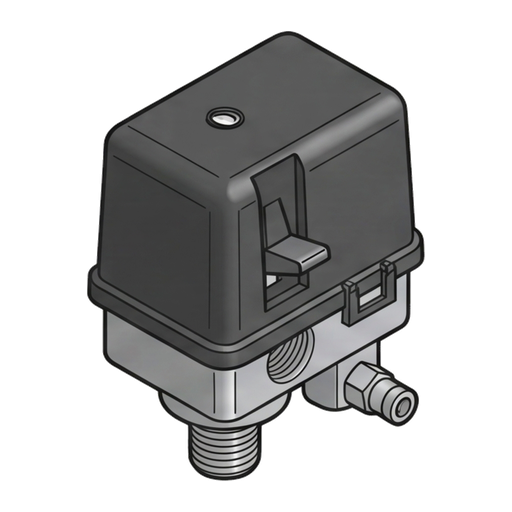
Sensing & Feedback covers the pressure switch that starts and stops the compressor based on tank pressure.

Pressure switches and feedback parts that make the compressor start and stop at the right pressure.
Tap any type to jump to its page. The Decision Guide further down asks three questions that funnel the spec to one of these.
Sensing & Feedback covers the pressure switch that starts and stops the compressor based on tank pressure.
The pressure range and differential need to match the compressor, tank, and safety valve settings.
Port count, thread style, lever, and unloader tube fittings decide whether the switch fits the machine.
Distributor-facing reading. The trade-off column is the one that closes the loop — every type buys something and gives something up. Knowing what each type costs you is how the right one gets on the quote without a callback.
Draw a line from the customer's answer at the top to the type name at the bottom. This is the page distributors screenshot and send to a customer the day before a quote call — so the customer comes prepared with the answers, and the call is about the brand and the budget, not the basics.
Pressure switches close the loop between stored air and motor control. A wrong pressure band, amp rating, port style, or unloader option can make a simple replacement fail immediately, so the quote needs the old switch details and the compressor duty.
Sensing feeds the logic: the switch reports, the control decides.
→What the sensing serves; the pressure switch starts and stops the compressor it sits on, sized to the compressor's duty and motor.
→Tell us the end-use, the rough flow, and what climate the unit would sit in. We'll come back with a configured quote — the right type, the right tier, and the upstream gear the warranty assumes.
Start with the family, then add the quote inputs you know. Unknown specs stay open for SPC to confirm.
Your quote. We reply within one business day with pricing, lead-time, and configured parts.