DISTRIBUTOR-FIRST SUPPLY PARTNER · SINCE 1999 Live · Pneumatic Automation System

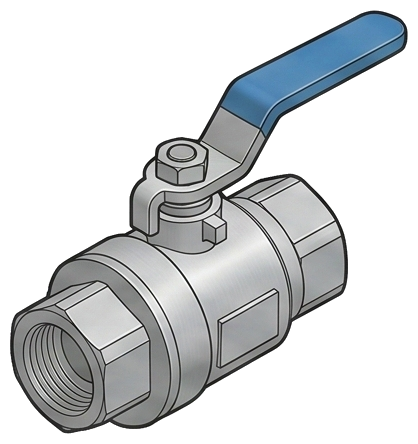
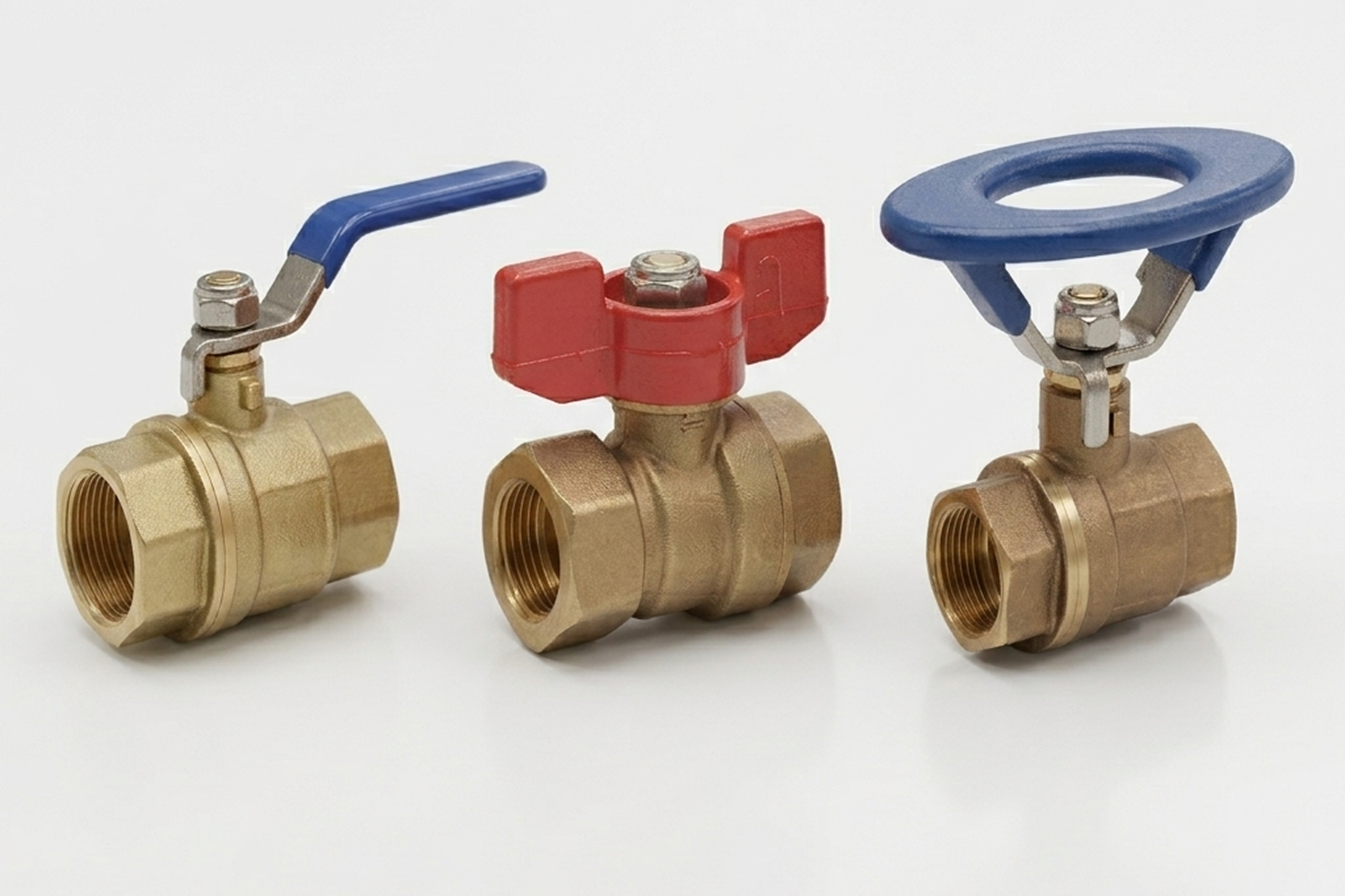
A ball valve is a manual quarter-turn on/off isolation valve: a bored ball inside the body rotates 90° from fully open (bore aligned with the line) to fully closed (bore crossways). It is the workhorse line-isolation point in a compressed-air or fluid system: the lever turned crossways drops the downstream branch dead so a tech can break a union, swap a regulator, or service a tool without bleeding the whole header. Its defining traits are a forged-brass (or stainless) threaded body, a full-port bore that flows the line's full capacity when open, and a lever with a padlock provision for OSHA lockout-tagout. It is on/off only, never a throttle, and it hard-pipes into a threaded run (NPT/BSPP) rather than seating tube the way a push-to-connect valve does. It is the lockable service-and-isolation valve every drop, branch, and equipment tie-in should carry, and is sold and quoted as a separate SKU. Distinct from the two siblings: the 1/4-turn shutoff valve is the same family pitched specifically as the point-of-use FRL-drop accessory; the PTC ball valve is the tubing-native push-to-connect version. This is the general-purpose threaded brass/stainless ball valve across the full size range, air or water.
When the threaded ball valve is the right call, and when to spec something else. Review the points below.
A quarter turn swings the lever from open to closed, parallel to the pipe = open, crossways = closed, unmistakable at a glance. The downstream branch drops dead for service while the upstream header stays live. The cheapest, most-used isolation device in the plant.
The hole in the lever takes a standard OSHA padlock; the valve IS the lockout device at every drop, branch take-off, and equipment tie-in. Confirm the lever has the hole; economy levers sometimes omit it and a no-hole valve fails the LOTO audit.
A full-port ball valve''s bore equals the nominal pipe size, open, it''s not in the way. A cheaper standard-port valve has a smaller bore and a mild restriction. On continuous-flow critical lines spec full-port; on occasional-service drops standard-port is fine.
Forged brass for general industrial air, oil, gas, and water. Stainless for washdown, food, pharma, corrosive, or outdoor. Brass in washdown corrodes within 6-12 months, the cost delta to stainless is modest, the failure cost is high. Potable water needs a lead-free body.
A ball valve is on/off, partial-open positions erode the seat and give non-repeatable flow. → Re-spec to flow control valve for bidirectional line throttling, or a speed controller for one-direction cylinder metering. Run a ball valve fully open or fully closed, never in between.
A ball valve is manual and bidirectional when open, it doesn''t block reverse flow on its own. → Re-spec to check valve when the job is automatic one-way protection. The two often pair in series on a compressor discharge line (check + ball valve).
This is the hard-piped, threaded valve. On a push-to-connect tubing system, threading it in means cutting and re-plumbing the run. → Re-spec to PTC Ball Valve for tool-less tubing isolation, or the 1/4-turn shutoff valve when the pitch is specifically the point-of-use FRL-drop accessory.
From the machine spec sheet to the part number. Answer what you know, leave the rest blank, and send.
Pick the priority; the quote desk handles the cross-reference.
Answer once. Pick every brand you want priced, and we quote each one on the same spec.
Each industry below uses this product across the listed areas. Open an industry to see how it fits the rest of its system.
Also applies to Every machine drop in a working pneumatic plant. · Branch take-offs from main headers. · Equipment service isolation. · Receiver-tank drain and bypass. · New installation and machine relocation. · Washdown, food, and pharma (stainless).
Every entry is a real product on this site, linked to its page. Quote them on the same line item.
Stock ball valves in box quantities of 10/25/50 at the manufacturer's volume break, organized by size and material. Plant audits routinely surface 10-50 missing isolation points across drops and branches; the audit-and-bulk-quote motion is the typical sale. Carry brass for general service and stainless for washdown/food separately; they're different SKUs and the material call is non-negotiable per environment.
Send us the application — a specialist routes you to the correct tier with a configured part. Lead-times and pricing returned within one business day.
Your quote. We reply within one business day with pricing, lead-time, and configured parts.