DISTRIBUTOR-FIRST SUPPLY PARTNER · SINCE 1999 Live · Pneumatic Automation System
SPC Company
Pneumatic Automation / Actuation / Cylinders / Compact Cylinder
Layer 04 · Actuation Performance · SMC Price · YPC
What it is

Compact Cylinder

Compare tiers ↓

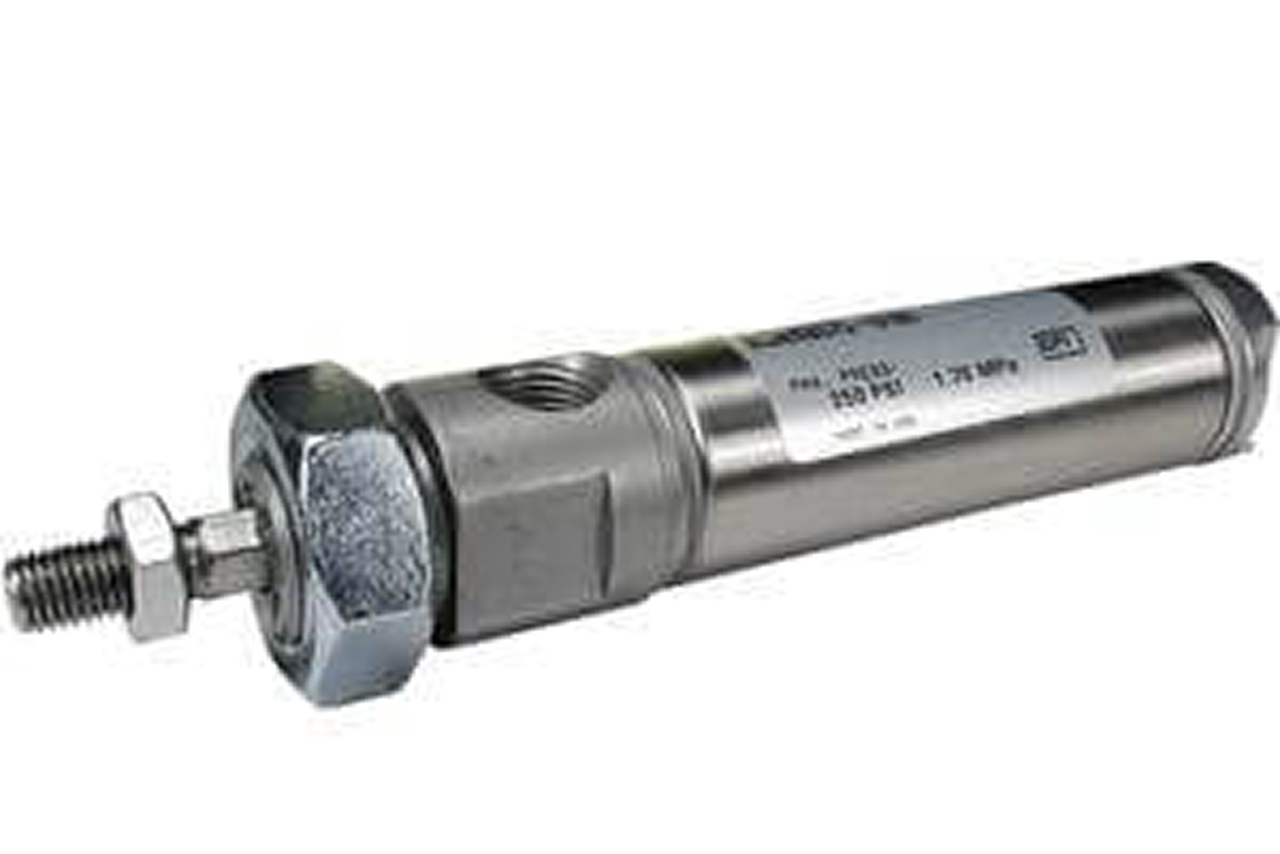
A compact cylinder is a small round-body pneumatic actuator with a short stroke and a body length typically 1/3 to 1/2 that of an ISO 15552 cylinder at the same bore. It is the workhorse of small automation, fixture tooling, jigs, conveyor stops, parts clamping, robot EOAT (end-of-arm tooling, the gripper or vacuum cup at the wrist of a robot arm). A typical packaging machine carries 30-80 compact cylinders against maybe 4-8 ISO or NFPA cylinders. The body is a sealed crimped assembly, so compact cylinders are not field-rebuildable; on seal failure they are replaced. They handle axial loads only, side load destroys the short rod-bearing surface within months, so any side-load application needs the guided/non-rotating variant or an external linear guide.

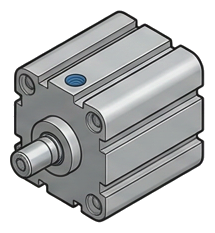
Pictorial Representative compact cylinder
Compact Cylinder — representative illustration
Real-world reference Representative compact cylinder
Compact Cylinder — representative product photo
Why it's needed

Why this matters.

When a compact cylinder is the right pick, and when to spec a different family. Review the points below.

01 · Key point
One-third the body length.

A 32mm compact runs ~1.5 inches of body length vs. 4-5 inches for ISO 15552 at the same bore. Thirty cylinders pack into a foot-square fixture footprint, the geometry that makes modern packaging machines, robot EOAT, and dense jigs possible at all.

02 · Key point
High-volume reorder line.

A typical packaging machine carries 30-80 compact cylinders against maybe 4-8 ISO or NFPA. Once the part number is captured into MRO, replacement runs on calendar: a 50-cylinder machine on a 5-year cycle = 10 reorders/year indefinitely.

03 · Key point
Throw-away math wins below 50mm.

Compact body is a sealed crimped assembly, not field-rebuildable. A new compact ($40-200) is cheaper than rebuild labor on an equivalent ISO. Replace on seal failure (3-7 years on continuous duty); don't hunt for kits that don't exist.

04 · Pro tip
Qualify axial-only before quoting.

The short body = short rod-bearing surface = essentially zero side-load tolerance. Any off-axis push, guided motion, or eccentric attachment scores the rod within months. If side load exists → switch to the guided / non-rotating variant or pair with an external linear guide.

05 · Where not to use
Long stroke (over 100mm).

Compact is engineered for short stroke, over-stroking defeats the small-footprint purpose and runs out of body length. → Re-spec to ISO 15552 for mid-stroke 100-500mm work, or rodless above 300-600mm.

06 · Where not to use
Field-rebuildable applications.

No seal kits exist for compact, labor to attempt a rebuild exceeds the new-cylinder price. → Switch to ISO 15552 or NFPA tie-rod when the customer's service model is rebuild-on-failure rather than replace-on-failure.

07 · Where not to use
Heavy-duty or 4"+ bore.

Compact tops out around 100mm on light-duty service. → Re-spec to NFPA tie-rod (1.5"-14" bore) for North American heavy-duty work, or heavy-duty cast for press / forming / foundry environments.

Key selection criteria

What we need to spec it right.

From the machine spec sheet to the part number. Answer what you know, leave the rest blank, and send.

04Choose your priority  ·  core differentiator

Whatever your lever — performance, value, or price — SPC has the right brand.

Pick the priority; the quote desk handles the cross-reference.

01 Performance 1 brand
03 Price 1 brand
Where it's used

Industries served.

Each industry below uses this product across the listed areas. Open an industry to see how it fits the rest of its system.

Also applies to Fixture tooling and assembly jigs · The largest install volume · Robot end-of-arm tooling (EOAT) · Small-part clamping and parts-presence verification · Position-switch integration is mandatory · Test stands and inspection equipment · Pneumatic-actuated valves and process equipment

Install · 7 critical steps

The things that matter on the first install.

Step 01
Verify the application is purely axial
Side-load tolerance on a compact cylinder is essentially zero; the short rod-bearing surface fails fast under any off-axis load. If the application imposes side load, specify the guided/non-rotating variant or pair with an external linear guide.
Step 02
Calculate force-bore at the customer's actual operating pressure
Required push force ÷ (operating pressure × piston area) = bore. Standard compact bores 12, 16, 20, 25, 32, 40, 50, 63, 80, 100mm. Push at 80 PSI: 12mm ≈ 14 lbs, 25mm ≈ 63 lbs, 32mm ≈ 100 lbs, 50mm ≈ 245 lbs. Add 25-50% safety factor.
Step 03
Pick stroke length to match travel distance
Compact cylinders come in standard stroke increments (typically 5mm or 10mm). Pick the shortest stroke that covers the travel: over-stroke defeats the compact purpose.
Step 04
Pick mount style and rod-end together
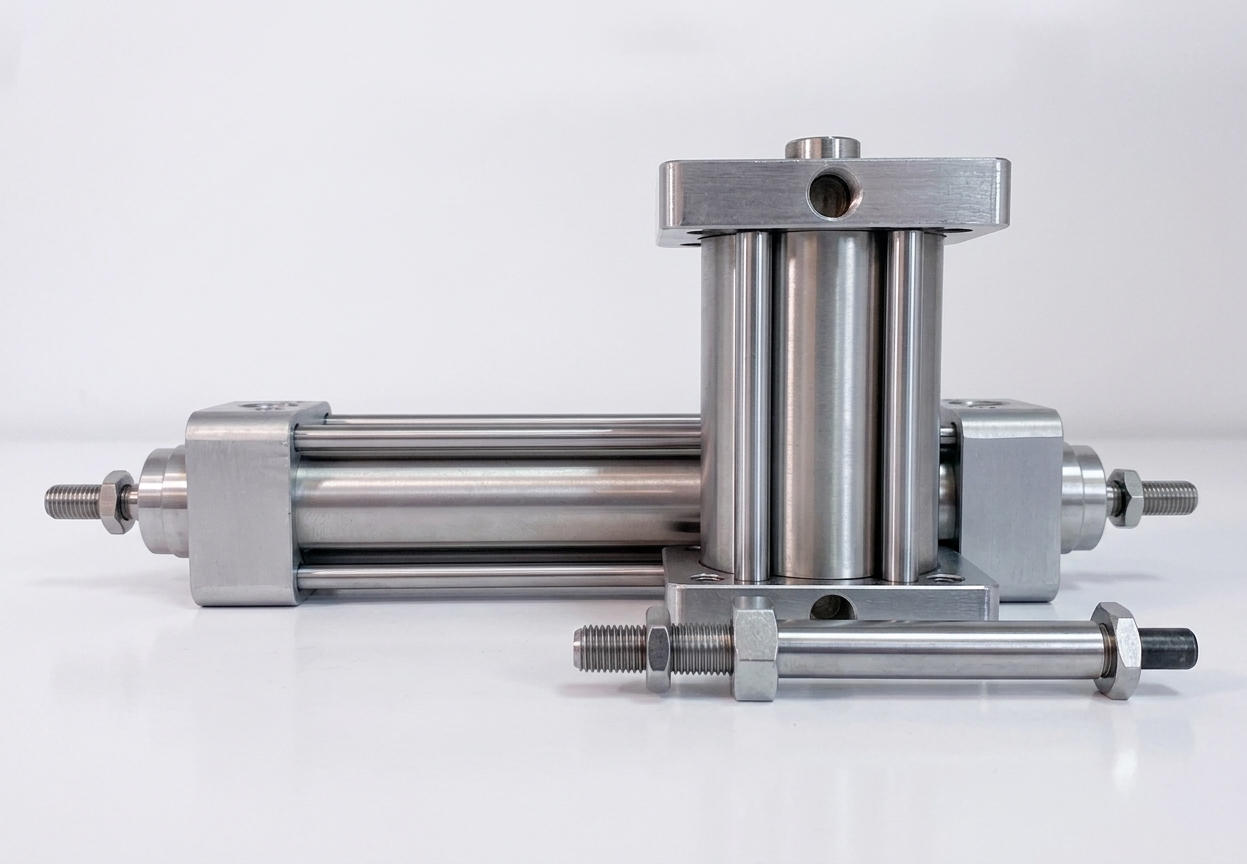
Mount: foot, flange, threaded nose, through-hole body, tapped-hole body. Rod-end: male thread, female thread, or rod-end clevis. Match to the machine's installed bracket and load attachment hardware.
Step 05
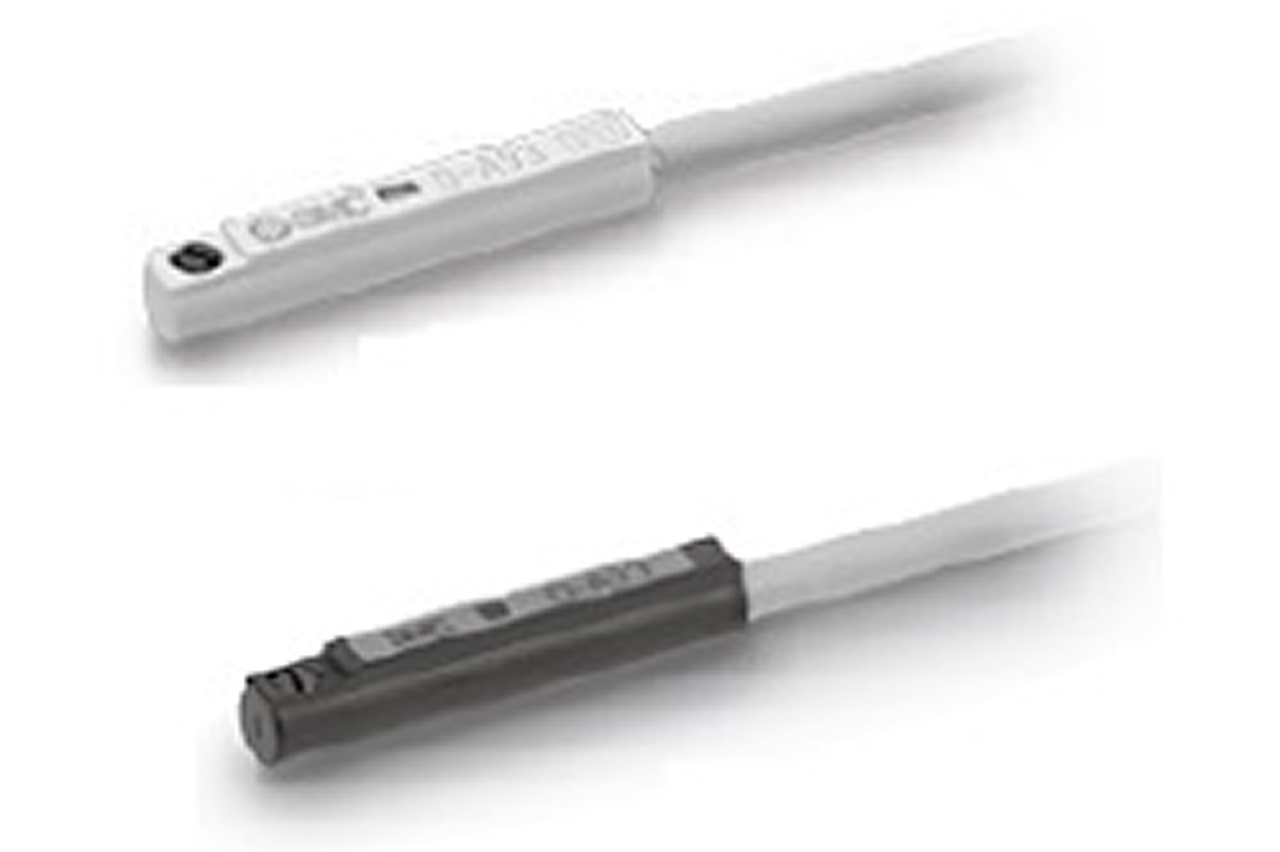
Specify position switches on the same order line
Magnetic piston is standard; switches are accessory items in band-mount or rail-mount. Most installs need extend + retract feedback; quote 2 switches plus mounting hardware per cylinder.
Step 06
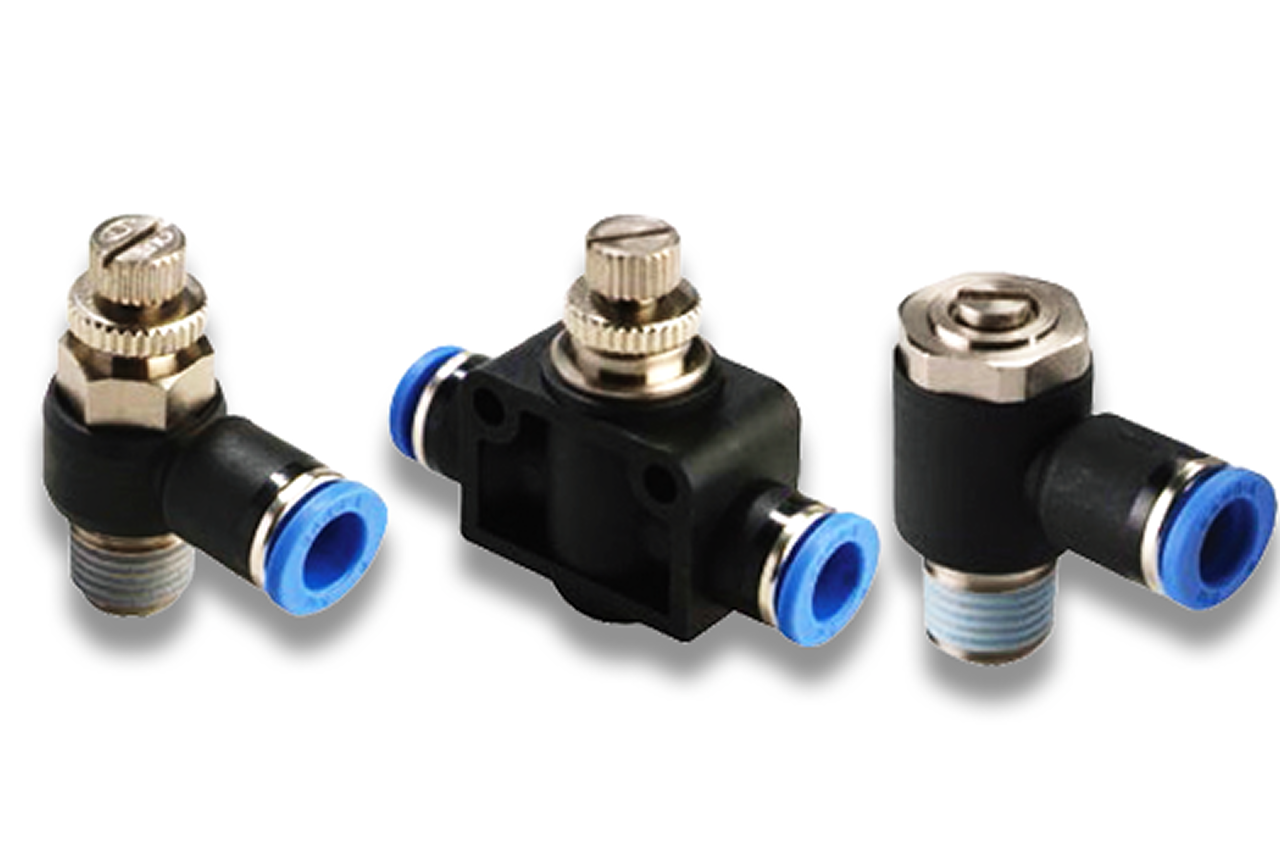
Use speed controllers at the cylinder ports
Cylinder speed is set by exhaust-side flow control at the cylinder ports, not at the supply manifold, not at the regulator. Compact cylinders accept speed controllers in M3, M5, 1/8", 1/4" NPT depending on bore. Two per cylinder; install at quote time.
Step 07
Document the install count for MRO planning
Record brand, model, bore, stroke, mount, switch quantity, total install count across the customer's machines. Project replacement at 3-7 year cycle (continuous duty) or longer (light duty). Compact replacement is a high-volume reorder line that runs predictably on calendar once the count is documented.
Troubleshoot · top failures

Most returns trace to one of these causes.

Symptom
Most likely cause
Fix
Air leaking at the rod, replace or rebuild?
Rod seal worn, the most common compact failure. 3-7 years on continuous duty is typical seal life. Compact cylinders are sealed crimped assemblies and NOT field-rebuildable.
Replacement. Don't look for seal kits, they don't exist for compact. New-cylinder cost is competitive with what a rebuild would cost in labor alone. Document the install date for the next replacement cycle.
Rod sticky, scored, or seized
Side-load damage: the customer's setup is loading the rod off-axis. The most common compact cylinder misapplication. Standard compact cylinders cannot tolerate side load; the rod-bearing surface degrades within months.
Replace the cylinder AND change the application design. Switch to a guided/non-rotating cylinder in the same bore, or pair the compact with an external linear guide that takes the side load before it reaches the rod. Replacing without fixing the side-load source results in the same failure within months.
Cylinder strokes but with reduced force
Three possibilities: supply pressure below spec (most common), piston seal bypassing internally (5-7 years), or cylinder undersized (RFQ used continuous force, not peak surge).
Check supply pressure under load first. Leak-test by pressurizing one chamber and listening at the opposite port. If pressure and seals check out, resize.
Cylinder slams hard at end of stroke
Most small-bore compact cylinders have rubber bumpers rather than adjustable air cushions; the bumper degrades and produces end-of-stroke hammer. Larger-bore compact with adjustable cushion: cushion screw open, cushion seal worn, or load/velocity exceeds rating.
For bumper-equipped cylinders, replace the cylinder (bumper isn't serviceable). For cushioned cylinders, close cushion screw progressively. If load/velocity exceeds rating, add external shock absorber. Don't accept end-of-stroke hammer: it destroys the cylinder and the mount over time.
Magnetic switch triggers intermittently
Switch slid out of position in the band/rail mount (most common on vibrating equipment), switch failing (water ingress, cable damage), or, rarely, piston magnet weakening after 20M+ cycles.
Verify switch position first, cycle the cylinder slowly and watch the trigger LED. Re-clamp if drifted. If position is right but trigger intermittent, replace the switch and verify wiring.
Visible body damage (dent, scoring, crack)
Mechanical impact during install or service, over-pressure event, or, rarely, manufacturing defect on a value-tier import.
Replace. Compact cylinders are not repairable from external damage; even minor dents affect bore concentricity. Document the failure mode to inform guarding decisions.
Get the right compact cylinder on quote in 24 hours.

Send us the application — a specialist routes you to the correct tier with a configured part. Lead-times and pricing returned within one business day.

Open quote engine ↑