DISTRIBUTOR-FIRST SUPPLY PARTNER · SINCE 1999 Live · Pneumatic Automation System

SPC Company
Pneumatic Automation / Distribution & Conveyance / Quick Couplers / Industrial Quick Coupler
Layer 02 · Distribution & Conveyance Performance · Prevost Value · AIGNEP
What it is

Industrial Quick Coupler

Compare tiers ↓

The everyday workhorse coupler for general industrial plants, the standard-profile socket-and-plug coupling that joins a fixed air line to a portable tool or hose. The socket (female body) mounts on a wall outlet or hose end and receives the plug; the plug (male end) mounts on the tool or hose. Ball-detent or sleeve-detent locking mechanism: spring-loaded balls inside the socket capture the plug's retention groove when it's pushed in, and pulling the sleeve back retracts the balls to release. "Industrial" describes the most widely used coupling profile in US plants (also called Type A or universal, conforming roughly to ISO 6150B) rather than a different class of hardware. It is the profile most general manufacturing and MRO facilities standardize on. Caution: an industrial-profile plug only mates with an industrial-profile socket; confirm the profile already installed before specifying replacements. A standard industrial coupler releases the plug while line pressure is still in the hose, the hose-whip condition addressed by OSHA 29 CFR 1910.242(b). Where the facility has no overriding budget constraint, the safety-vented variant is the recommended default.
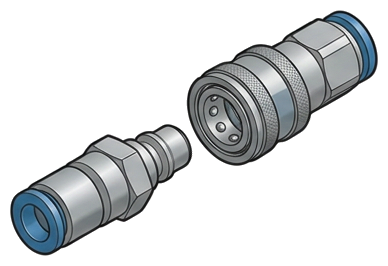
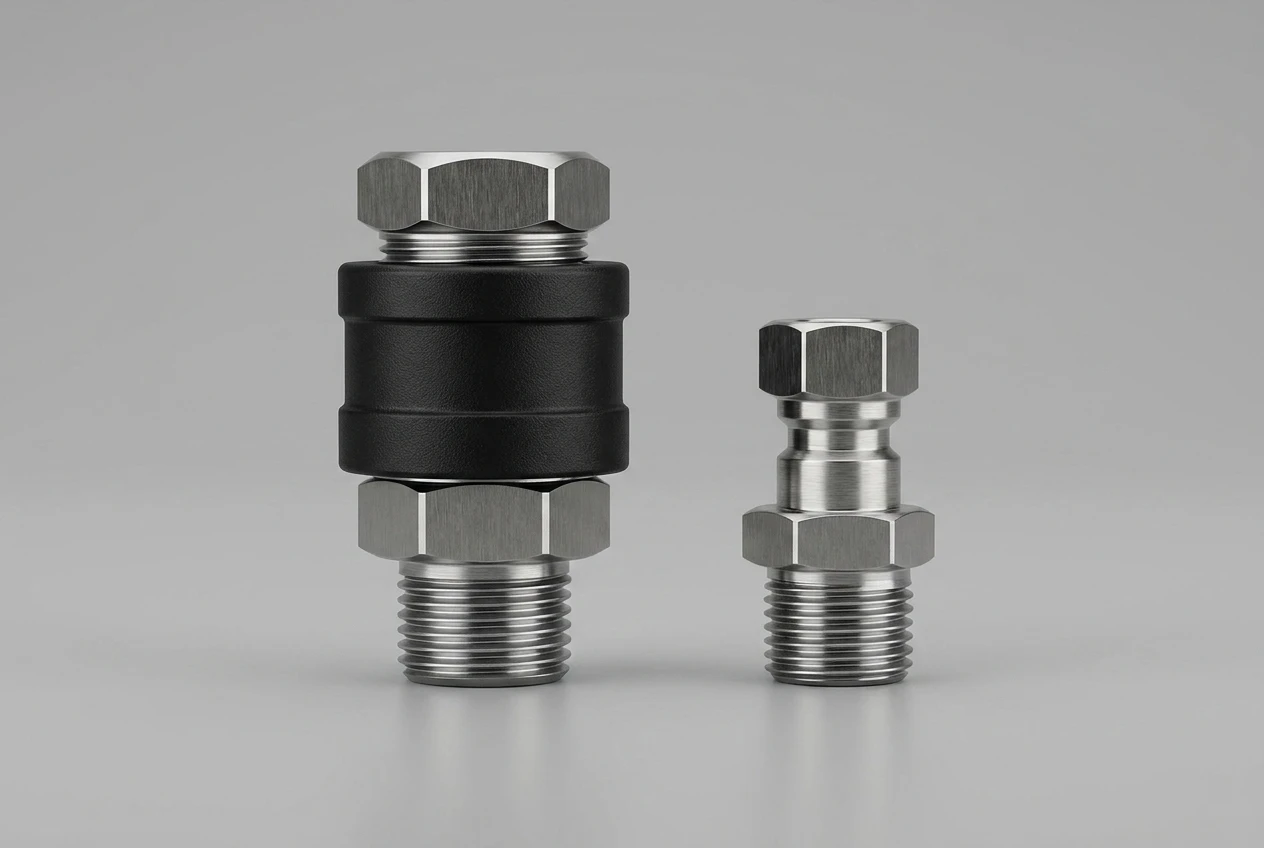
Pictorial Representative industrial quick coupler
Industrial Quick Coupler — representative illustration
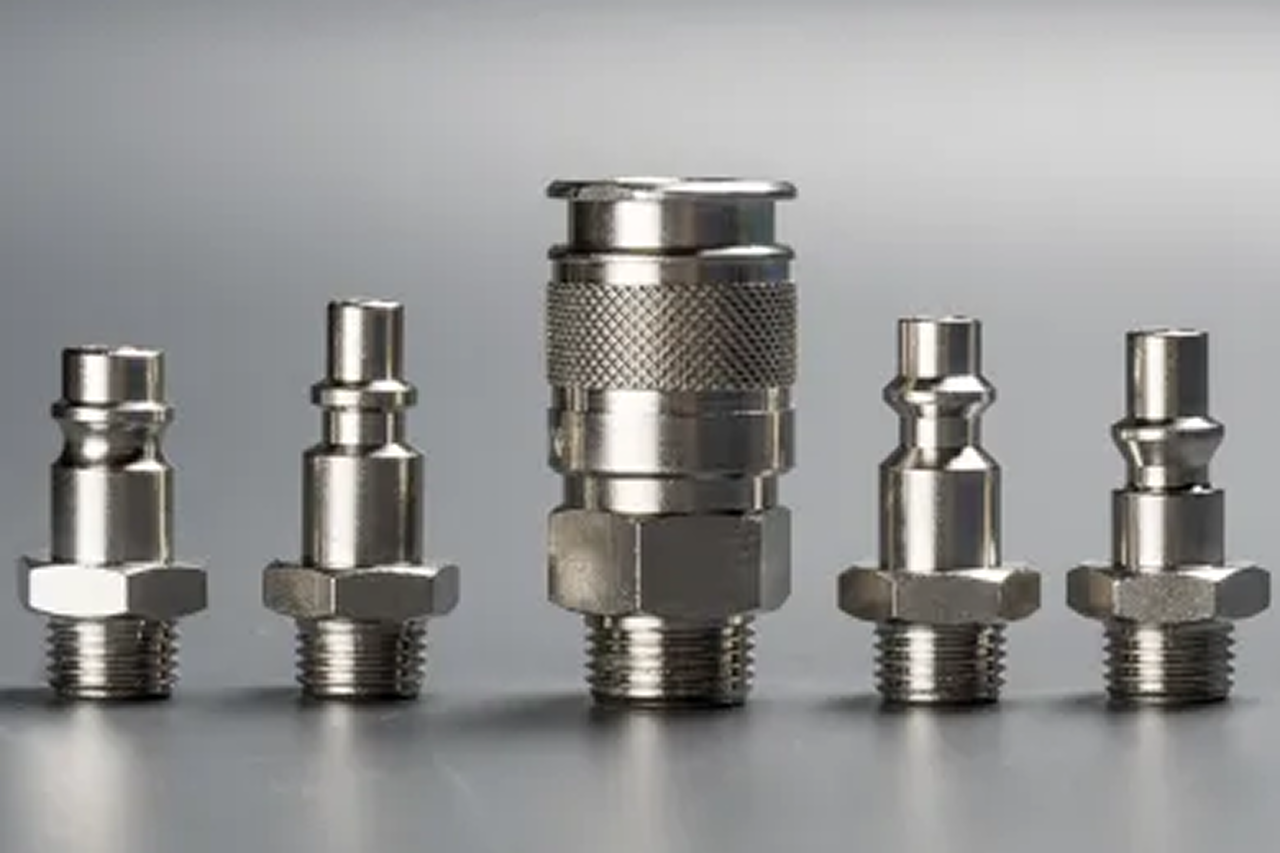
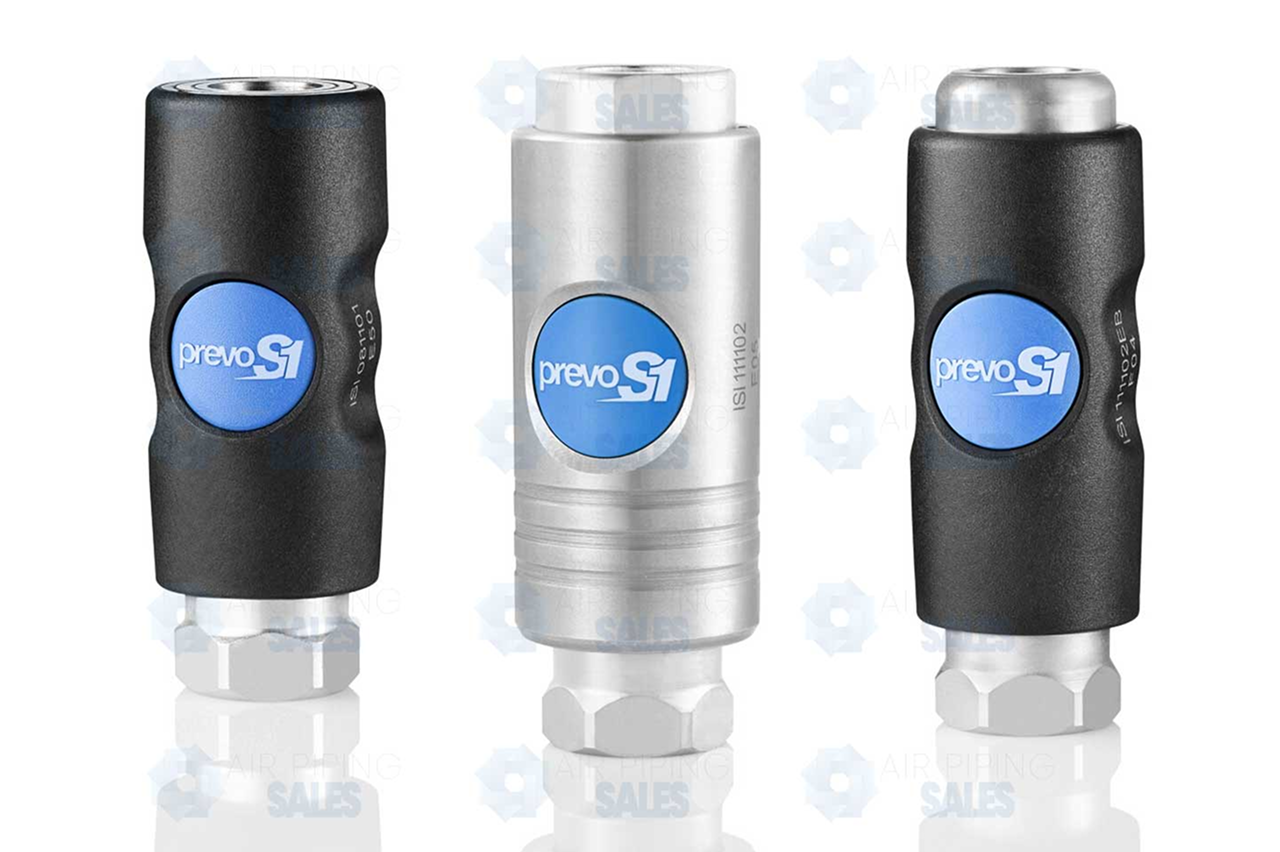
Real-world reference Representative industrial quick coupler
Industrial Quick Coupler — representative product photo
Why it's needed

Why this matters.

Choose the right industrial socket, and when to step elsewhere in the coupler family. Review the points below.

01 · Key point
Single-action push-to-connect.

Spring-loaded ball-detent or sleeve-detent lock captures the plug''s retention groove on push-in; pull sleeve to release. No tools, no air shut-off, the workhorse mechanism in every plant.

02 · Key point
5-10 years in continuous service.

Industry Leader tier brass or steel sockets routinely run a decade before meaningful wear. Commodity imports fail in 12-18 months, customer pays twice when they buy on cheapest.

03 · Key point
Full profile + flow + material coverage.

Five profiles (Industrial / Type A / ISO 6150B dominant US-spec), standard + high-flow classes, composite/brass/steel/stainless bodies. Standardize the plant on one brand and one profile.

04 · Pro tip
Match flow class to highest-SCFM tool.

Standard ~15-25 SCFM: small impacts, ratchets, drills, blow guns (4-15 SCFM). High-flow ~30-60 SCFM: 3/4" / 1" impacts, die grinders, large sanders, sandblast (25-50+ SCFM). Wrong class throttles the tool 20-40%.

05 · Where not to use
OSHA-audited plants, EHS programs.

Standard sockets release the plug under full hose pressure, the hose-whip hazard of 29 CFR 1910.242(b). → Step over to safety quick coupler for any facility with an active EHS program or audit history; same plug inventory carries over.

06 · Where not to use
DOT-regulated brake circuits.

Industrial couplers aren''t FMVSS-rated and aren''t legal in air-brake lines. → Use DOT air-brake fitting on every service, emergency, parking, or trailer brake circuit on commercial vehicles.

07 · Where not to use
Paint shops with brass/steel body.

Hard sockets scratch painted parts on every drop. → Switch to composite-body sockets (non-marring) in paint and finishing; stainless for food/wash-down environments.

Key selection criteria

What we need to spec it right.

From the machine spec sheet to the part number. Answer what you know, leave the rest blank, and send.

04Choose your priority  ·  core differentiator

Whatever your lever — performance, value, or price — SPC has the right brand.

Pick the priority; the quote desk handles the cross-reference.

01 Performance 2 brands
02 Value 2 brands
Where it's used

Industries served.

Each industry below uses this product across the listed areas. Open an industry to see how it fits the rest of its system.

Also applies to Factory drop stations and air-line panels · 20-200 sockets per mid-size facility · Tool cribs and pneumatic tool issue/return stations · Connect/disconnect cycle count is extreme · coupler service life shorter than typical plant install · Stock-deep, ship-fast play. · Pneumatic test benches and calibration / QC stations · Standing reorder with rental companies is high-volume and predictable. · Coupler enables maintenance access without disconnecting hard-piped supply, a critical productivity feature. · Hobbyist and small-shop applications

Install · 8 critical steps

The things that matter on the first install.

Step 01
Verify coupling profile against existing plug and socket inventory
Profile mismatch is the most common installation failure. Confirm the installed profile (Industrial / Type A / ISO 6150B is typical US-spec). Pull one sample of each from the customer's existing installation and verify against the new coupler's profile spec before opening packaging.
Step 02
Verify flow class against highest-SCFM tool
Standard couplers 15-25 SCFM; high-flow 30-60 SCFM. The largest tool in the connection set determines required flow class. Undersized couplers throttle large tools and undo the customer's tool investment.
Step 03
Verify pressure rating against line pressure
Standard industrial 150-300 PSI working depending on style and body material. Typical plant air at 90-120 PSI well within range, but high-pressure tool drops at 175+ PSI can approach the rating.
Step 04
Apply thread sealant and install socket to wall outlet or fitting
Wrap PTFE clockwise on male NPT, 2-3 wraps, leaving first thread exposed. Hand-tight, then 1.5-2 additional wrench turns. Do NOT over-torque, composite bodies can crack; stainless threads can gall.
Step 05
Verify mounting orientation matches application
Wall-mounted sockets typically install facing down or horizontal, never vertically up unless manufacturer specifies. Vertical-up collects condensate inside the socket body, accelerates seal wear, traps debris.
Step 06
Connect matching-profile plug and verify locking action
Push plug straight in, should seat with a positive click as ball detent engages. Pull on plug to verify locked. If plug pulls free, ball detent isn't engaging, verify profile match again, verify socket's ball detent isn't worn.
Step 07
Pressurize and leak-check
Restore line pressure slowly. Listen at plug-socket interface for hissing, wrong profile (most likely), damaged O-ring, or damaged seal seat. Listen at socket-to-outlet thread for separate hissing, insufficient thread sealant or cross-threaded install.
Step 08
Document install and reset replacement calendar
Record install date, brand, model, profile, flow class, body material, end-connection size, install location. Industry Leader tier couplers typically run 5-7 years in continuous service before replacement; calendar a periodic inspection at 3 years. For high-cycle locations (impact-wrench drops), reduce inspection interval to 18-24 months.
Troubleshoot · top failures

Most returns trace to one of these causes.

Symptom
Most likely cause
Fix
Plug won't engage the socket, pushes in but doesn't click or lock.
Profile mismatch is by far the most common cause: Industrial plug pushed into ARO socket, ARO into Tru-Flate, etc. Secondary: worn ball detent (springs weak from age or thousands of cycles), debris in detent channels, or damaged retention groove on plug from previous misuse.
Verify profile by pulling a known-matching plug from same socket family. If profiles match, inspect socket's ball-detent action; pull sleeve back, check that balls retract fully and spring back. If worn, replace socket. If groove looks gouged, replace plug.
Coupler engages but leaks under pressure.
Worn O-ring on plug's seal land (typical after 1-2 years of cycling), damaged O-ring from contaminated socket (debris scored), wrong-profile (plug seats far enough to lock but not far enough to seal), damaged seal seat in socket, or insufficient thread sealant at socket-to-outlet causing leak that mimics interface leakage.
Identify the leak location: at plug-socket interface or at threaded body. Interface: disconnect, inspect O-ring, replace plug if cracked. Thread: depressurize, remove socket, clean threads, reapply fresh PTFE.
Coupler won't disconnect, sleeve pulls back but plug stays seated.
Oxidation between plug and socket (humid plants, coastal), socket's ball detent stuck (corrosion or debris), plug's retention groove has burrs from previous forced disconnect, or sleeve's return spring binding.
Spray light penetrating lubricant at the interface and visible sleeve channels, work the sleeve. If still stuck, depressurize and apply mechanical leverage. For chronically sticky sockets, clean and lubricate per manufacturer service; if cleaning doesn't resolve, end-of-life.
Reduced tool performance, slow, lacks torque, doesn't deliver rated output.
Almost always flow class mismatch: undersized standard-flow restricting a high-SCFM tool. Secondary: kinked or undersized supply hose, undersized supply piping upstream, or insufficient supply pressure at coupler inlet.
Check coupler flow class against tool SCFM rating. If standard on a high-demand tool, upgrade to high-flow. If flow class correct, check hose ID (3/8" for tools up to 25 SCFM, 1/2" for higher). If hose correct, check supply pressure at coupler with a gauge.
Sleeve sticks or pulls back but won't release the plug.
Worn sleeve detent (sleeve no longer holds retracted long enough to release), spring assembly weak, debris in sleeve channels, or older couplers' sleeve retention mechanism worn out.
Disassemble per manufacturer service. Clean all channels with mineral spirits, inspect spring, reassemble with light lubrication. If sleeve detent mechanically worn, replace. Field-serviceable Industry Leader tier designs support sleeve-assembly replacement; commodity couplers require socket replacement.
O-ring failing rapidly (less than 1 year).
Temperature above seal rating (NBR ~200°F; hotter needs FKM), chemical attack from solvents or oil contamination in air stream, abrasive particulate scoring the seal, or high-cycle applications wearing faster than calendar-based assumption.
For high-temperature, upgrade to FKM seals. For solvent/oil, address upstream coalescing filter. For high-cycle (hundreds per shift), spec higher-grade seals and rotate couplers out every 12-18 months as preventive.
Threaded body connection leaks at socket-to-outlet.
Insufficient thread sealant, wrong thread type (NPT installed into BSPT outlet, threads engage but don't seal), damaged outlet threads, over-torquing (thread deformation or composite cracking), or galvanic corrosion between dissimilar metals.
Depressurize, remove socket, inspect both thread sets. Verify NPT vs. BSPT match. Wire-brush clean. Fresh PTFE (2-3 wraps clockwise) or thread paste. Reinstall to correct torque.

Get the right industrial quick coupler on quote in 24 hours.

Send us the application — a specialist routes you to the correct tier with a configured part. Lead-times and pricing returned within one business day.

Open quote engine ↑