DISTRIBUTOR-FIRST SUPPLY PARTNER · SINCE 1999 Live · Compressed Air System
SPC Company
Compressed Air / Generation / Compressor Electrical Package / Motor Pulley
Layer 01 · Generation Value · SPC OEM
What it is

Motor Pulley

Compare tiers ↓

The motor pulley, the V-belt sheave that mounts on the motor shaft: is the part that sets the drive ratio of a belt-driven compressor. Its outside diameter against the diameter of the driven sheave on the airend or pump decides how fast the airend turns, and airend RPM is what sets the package's CFM. It lives in the Power & Drive layer between the motor and the belts, and it is a match-the-shaft, match-the-ratio part: bore (or bushing) has to fit the motor shaft, groove count and belt section have to match the driven sheave and the belts, and the OD has to give the ratio that produces the rated output. Get the bore wrong and it won't mount; get the OD wrong and the compressor runs slow, runs hot, or over-speeds the airend.

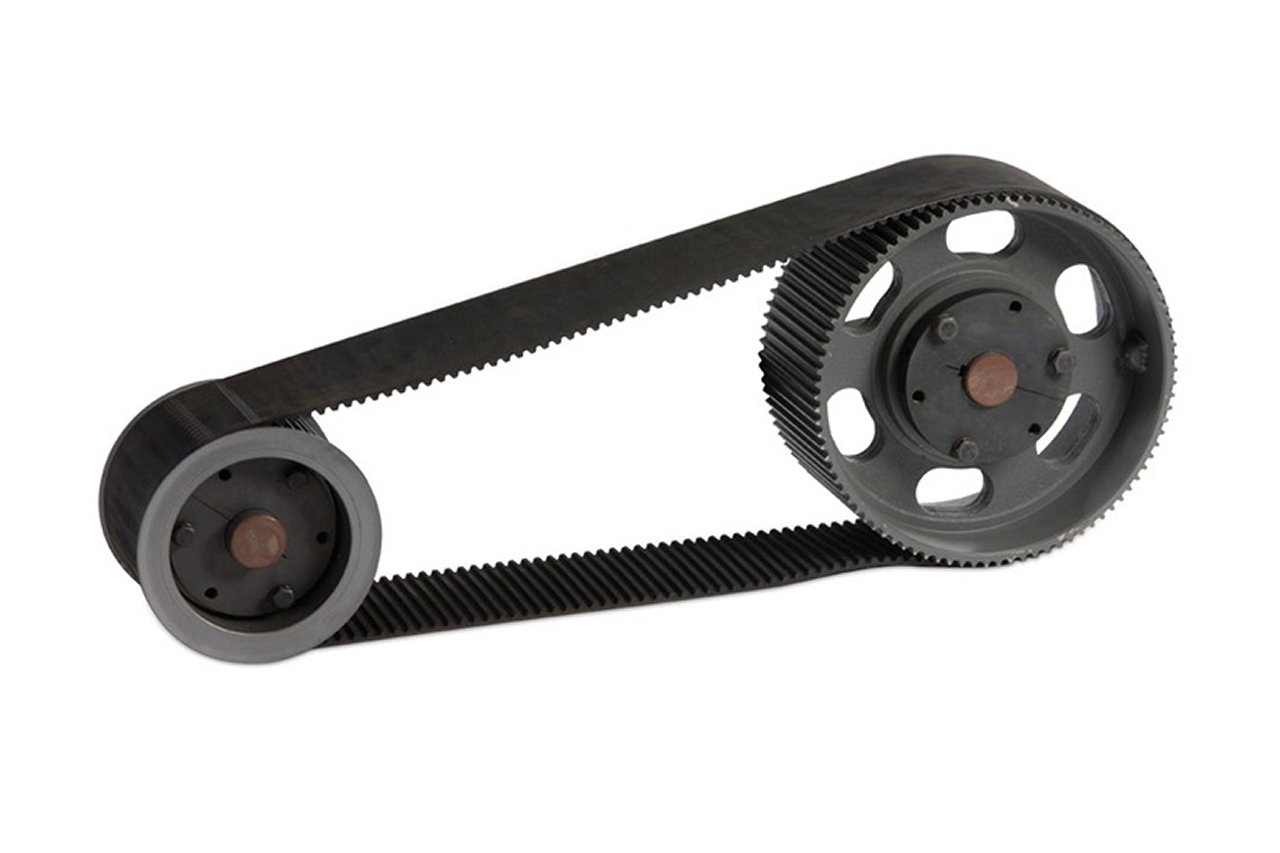
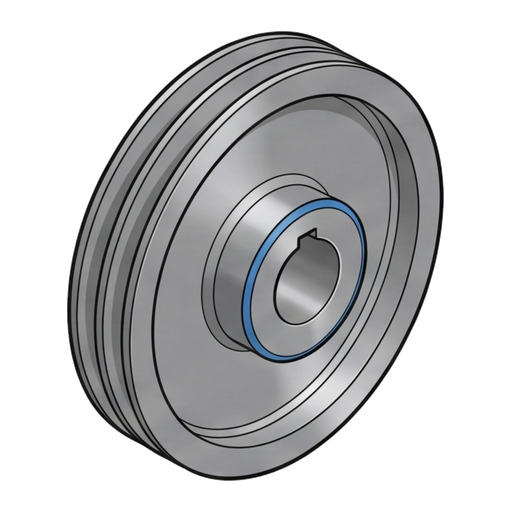
Pictorial Representative motor pulley
Motor Pulley — representative illustration
Real-world reference Representative motor pulley
Motor Pulley — representative product photo
Why it's needed

Why this matters.

When the motor sheave is the right call, how to size it, and the risks of a wrong OD or bore. Review the points below.

01 · Key point
The motor sheave sets the CFM.

Airend RPM = motor RPM × (motor pitch dia ÷ driven pitch dia), and RPM is what produces the flow. The motor sheave OD against the driven sheave is the whole ratio: change it and you change the compressor''s output, for better or worse.

02 · Key point
Match bore, groove, and section.

Bore (or bushing) has to fit the motor shaft, and groove count and belt section have to match the driven sheave and the belts as a set. A B-section sheave on A-section belts, or a 2-groove on a 3-groove driven, wastes the service visit.

03 · Key point
Variable-pitch tunes the output.

A variable-pitch sheave threads its flanges in or out to change the effective pitch diameter, so you can trim airend RPM and CFM in the field without buying a new sheave. The fix for a package that runs a little slow or a little fast, and the safe pick when the target ratio is uncertain.

04 · Pro tip
Replace the belts with the sheave.

Worn groove walls glaze and round the belt seat, and a worn sheave eats new belts. When the sheave is shot the belts are too; quote them as a matched set so the drive goes back fresh as a unit and there''s no callback in a month.

05 · Where it bites
Bigger OD without checking the load.

Sizing the motor sheave up for more CFM raises airend RPM, which raises the motor load, the belt tension, and the discharge temperature. Push it too far and you trip the overload or cook the airend. → Check motor HP and airend max RPM before changing the ratio.

06 · Where it bites
Rim speed on a fast drive.

Cast iron is rated to roughly 6,500 ft/min rim speed. A large OD on a 3600 RPM motor can run past that. → Compute rim speed (π × OD × RPM) and step to a steel sheave when a cast part is over its limit; a burst sheave is a safety event.

07 · Where it bites
Bushing and bore mismatch.

A QD sheave needs the matching QD bushing; a taper-lock needs its taper-lock bushing; they are not interchangeable, and the sheave ships without one. → Confirm the bushing series and the shaft bore together, or the sheave shows up and won''t go on the shaft.

Technologies within this type

Which technology — and when to choose it.

Same job, couple the motor to the belts at the right ratio, but the bore style and the pitch decide how it mounts and whether you can tune the speed. Match these to the shaft and the output you need, along with the groove count.

Fixed bore vs bushed (QD / taper-lock)

A fixed finished bore is cut to one shaft diameter and keyway, simplest, cheapest, exact. A bushed sheave (QD or taper-lock) takes a separate bushing so one OD covers a range of shaft sizes and pulls on/off without a press. Bushed is the service-friendly default on anything that gets changed in the field.

Fixed-pitch vs variable-pitch (adjustable)

Fixed-pitch is one OD, one ratio, one speed, what most packages ship with. Variable-pitch threads the flanges in or out to change the effective pitch diameter, which is how you trim airend RPM and CFM without buying a new sheave. Use it to dial in output or correct a speed that came out wrong; lock it once it''s set.

Cast iron vs steel

Cast iron is the standard and covers most compressor drives. Steel is the call when rim speed runs high, 3600 RPM motors and large outside diameters, where cast iron approaches its speed limit. Check the rim speed (RPM and OD) before assuming cast iron is safe on a fast drive.

Key selection criteria

What we need to spec it right.

From the machine spec sheet to the part number. Answer what you know, leave the rest blank, and send.

04Choose your priority  ·  core differentiator

Whatever your lever — performance, value, or price — SPC has the right brand.

Pick the priority; the quote desk handles the cross-reference.

02 Value 2 brands
Where it's used

Industries served.

Each industry below uses this product across the listed areas. Open an industry to see how it fits the rest of its system.

Also applies to Compressor rooms, replacement and rebuild · Belt-drive reciprocating packages · Belt-drive rotary-screw packages · Output correction and re-rates · Distributor counter & RFQ work

Install · 6 critical steps

The things that matter on the first install.

Step 01
Confirm bore-to-shaft and bushing before it ships
Fixed bore matches the motor shaft diameter and keyway; bushed sheaves need the correct QD or taper-lock bushing for that shaft. A bore mismatch means it won't go on; a missing or wrong bushing means a sheave that can't mount. Verify both against the actual motor shaft.
Step 02
Mount square and seat the key and bushing
Set the key, slide the sheave or draw the bushing up tight per the taper, and torque the bushing screws to spec. A loose bushing or key lets the sheave walk on the shaft and rounds the keyway; confirm it's seated before tensioning.
Step 03
Align the motor sheave to the driven sheave
Straightedge or laser the two sheave faces so the grooves run in one plane. Misalignment side-loads the belts and the bearings and is the number-one cause of fast belt wear; get this right before the belts go on.
Step 04
Install matched belts and set tension to spec
Belts go on as a matched set, never mixed old-and-new. Set deflection / tension to the belt spec, too loose slips and glazes, too tight side-loads the motor and airend bearings. Re-tension after the first few run hours as the belts seat.
Step 05
On variable-pitch, set the pitch, verify RPM, then lock it
Thread the flanges to the target effective pitch diameter, run the package, and confirm airend RPM and motor current are in range before locking the setscrews. Don't leave a variable-pitch sheave unlocked, vibration walks it off setting.
Step 06
Re-fit the belt guard
A rotating sheave and belt set is an exposed-machinery hazard, the guard goes back on before the package runs. Confirm clearance so the guard doesn't foul the sheave. Don't commission a drive with the guard off.
Troubleshoot · top failures

Most returns trace to one of these causes.

Symptom
Most likely cause
Fix
New belts wear out fast or run hot
Worn/glazed sheave grooves that no longer seat the belt, sheave-to-driven misalignment, or belt tension wrong (too loose slips, too tight side-loads).
Inspect the grooves for glazing, polishing, or a rounded seat, replace the sheave if worn. Straightedge the two sheaves into one plane. Re-set tension to belt spec and re-check after the belts seat.
Compressor low on air / not making rated CFM
Wrong drive ratio, undersized motor sheave OD, or belts slipping so the airend never reaches speed, or a variable-pitch sheave set to the wrong effective diameter.
Measure airend RPM against the rating. If low and belts aren't slipping, the ratio is wrong, step up the motor sheave OD or open a variable-pitch, then re-check motor current. If belts slip, fix tension and sheave wear first.
Motor trips the overload after a sheave change
Motor sheave OD increased too far, higher airend RPM raised the load past the motor's capacity. Or belts over-tensioned and side-loading.
Verify the new ratio against motor HP and airend max RPM. Step the motor OD back down, or back off a variable-pitch, until current is within nameplate FLA. Confirm tension isn't the cause before re-sizing.
Sheave walks on the shaft / keyway rounded out
Loose bushing or setscrew, key not seated, or a sloppy bore worn over time.
Pull the sheave, inspect the bore and keyway, if rounded, replace. Re-seat the key, draw the bushing up and torque the screws to spec. A bushed (QD/taper-lock) sheave grips better than a worn fixed bore on a tired shaft.
Vibration or noise at the drive
Sheave mounted off-square, bent or damaged sheave, misalignment, or a variable-pitch that vibrated off setting and unlocked.
Check the sheave runs true and is seated square. Re-align to the driven sheave. On variable-pitch, confirm the flanges are at one setting and the locks are tight. Replace a cracked or bent sheave, don't run damaged.

Get the right motor pulley on quote in 24 hours.

Send us the application — a specialist routes you to the correct tier with a configured part. Lead-times and pricing returned within one business day.

Open quote engine ↑