DISTRIBUTOR-FIRST SUPPLY PARTNER · SINCE 1999 Live · Product System

SPC Company
What it is

Replacement Pressure Gauge

The dial pressure gauge that mounts on a regulator, receiver, header tap, or instrument port, reads system or downstream pressure mechanically via a Bourdon tube, no power required. Three jobs across the plant: on a regulator it reads outlet pressure so the operator knows what the machine is actually getting; on a receiver or header it reads system pressure for an at-a-glance health check; on an instrument tap it reads a calibrated point for troubleshooting. The mechanical (analog) gauge is the standard, digital pressure transducers are sold for calibration-grade measurement and HMI integration, but the analog dial remains the day-to-day plant tool because it survives vibration, doesn't need power, and reads instantly. Every regulator, receiver, and instrument tap in a plant carries one, so gauges ship both as individual spare-parts SKUs and as bulk-quoted MRO stock.
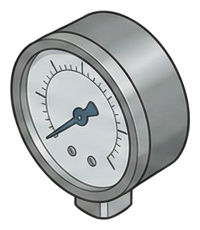
Pictorial Representative replacement pressure gauge
Replacement Pressure Gauge — representative illustration
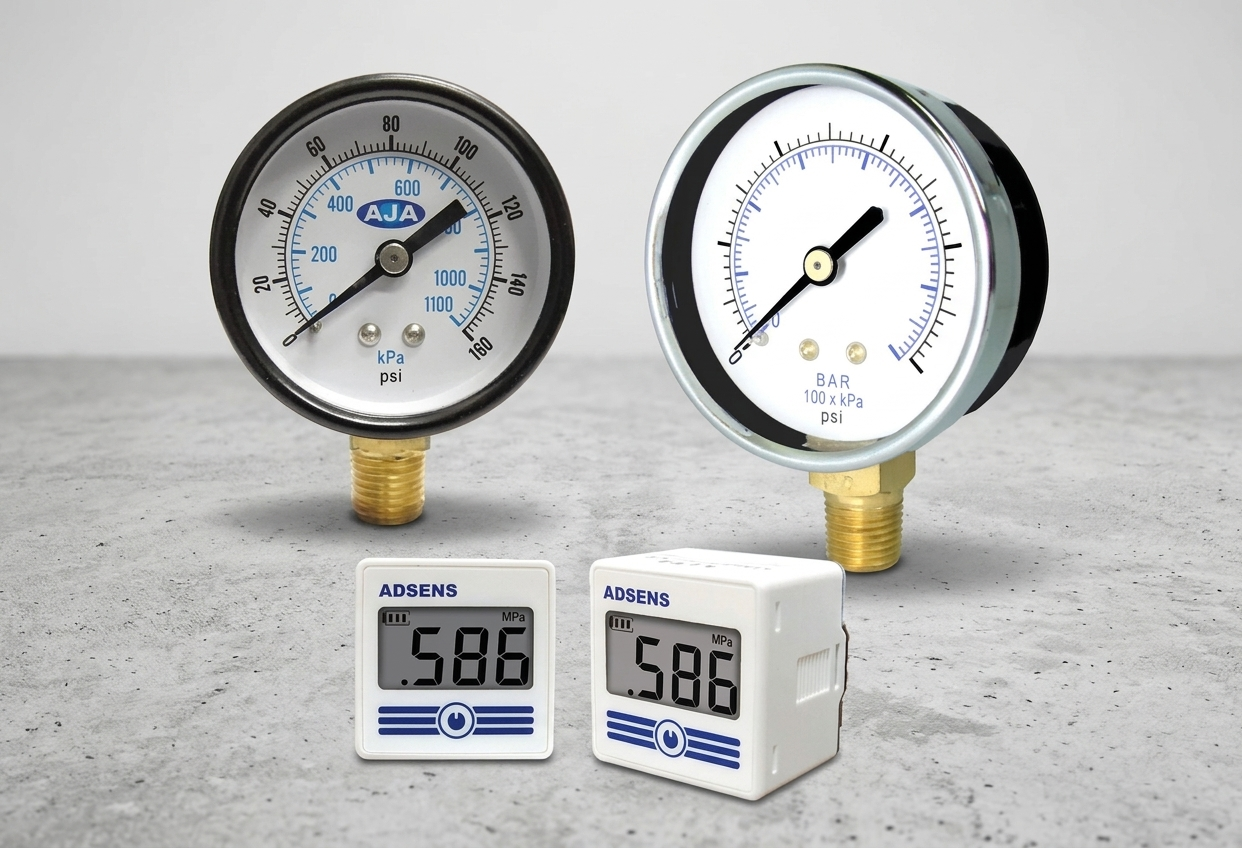
Real-world reference Representative replacement pressure gauge
Replacement Pressure Gauge — representative product photo
Why it's needed

Why this matters.

When the dial gauge is the right call, and when the spec needs to step up. Review the points below.

01 · Key point
Universal attach on every FRL.

Every regulator, receiver, and instrument tap in a plant carries one; a mid-size plant has 50–200 gauges installed. Quote one with every FRL service kit; the bowl is already off and labor is already happening.

02 · Key point
No power, instant reading.

Mechanical Bourdon tube reads pressure with no electronics, no signal wiring, no HMI dependency. Survives vibration, reads instantly, the day-to-day plant tool for operators and maintenance.

03 · Key point
Stocked by the box, not the unit.

A 50-FRL plant runs through one box of 12 every 12–18 months. Single-spec stocking (2", 0-160 PSI, glycerin, 1/4" NPT, lower-mount) simplifies the MRO crib and locks in the standing reorder.

04 · Pro tip
Size gauge max to 1.5× operating PSI.

Needle should ride mid-scale, 90 PSI system takes 0-160 PSI, not 0-100. A pinned-near-max gauge stresses the Bourdon tube and dies in 1–2 years; correctly-sized runs 10+. Glycerin-fill on any vibrating install for 3–5× life.

05 · Where not to use
HMI or PLC data logging.

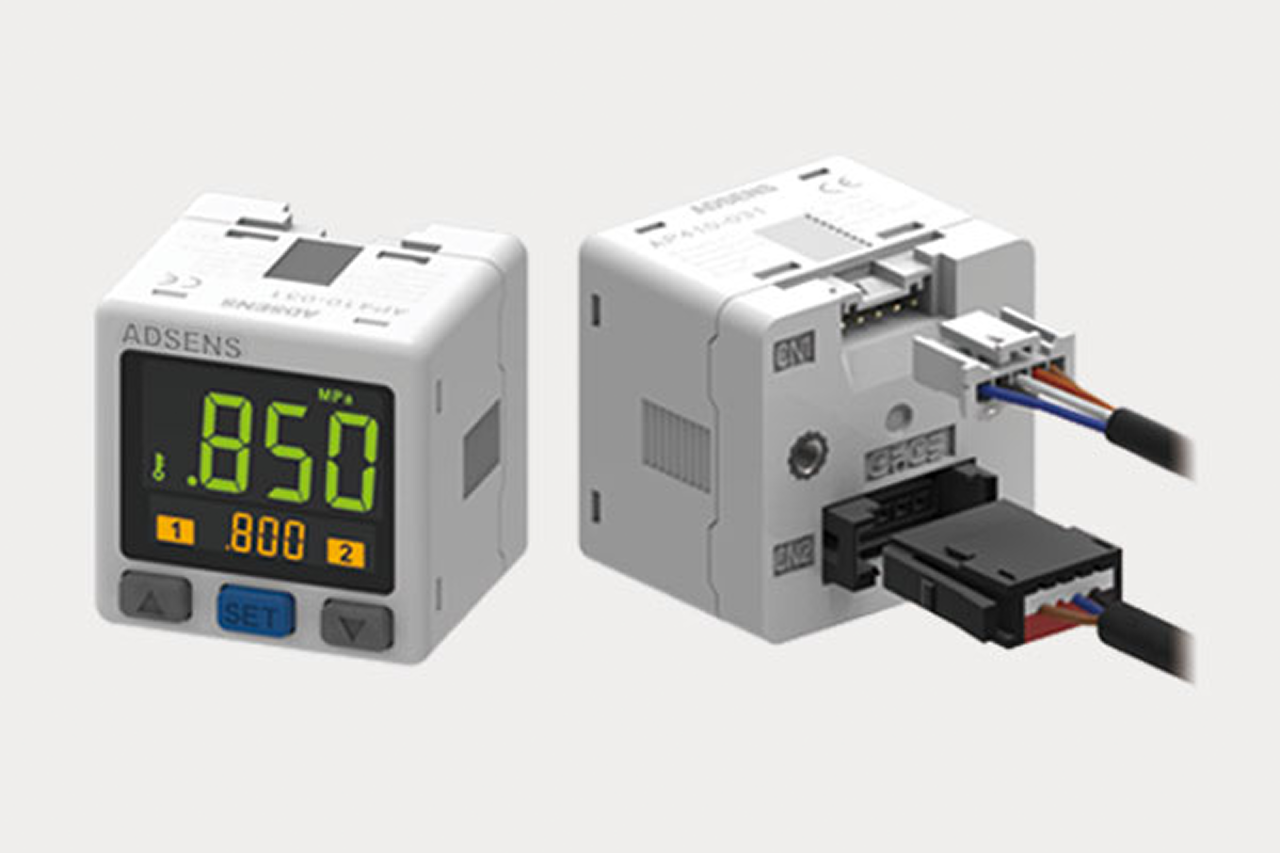
Dial gauges serve visual reading, not the controller, alarms, recipe control, and data logging need a digital output. → Switch to a pressure transducer/sensor; dial gauge is for the operator, transducer is for the PLC.

06 · Where not to use
FDA, aerospace, automotive Tier 1.

Standard ±3-2-3% industrial accuracy fails the audit on regulated lines. → Spec Grade A ±1.5% with NIST-traceable calibration certificate; 3–5× the ASP but mandatory for the application.

07 · Where not to use
Corrosive process or direct food contact.

Brass internals and ABS case fail fast on chlorinated, acidic, or washdown service; direct product contact violates HACCP. → Spec stainless 316 internals + stainless case + sealed-diaphragm isolating the Bourdon tube from process fluid.

Cross-reference to SPC

Running another brand's part? Match it to ours.

Enter the part number you have today and we'll resolve the SPC equivalent. Don't have it? Tell us the machine and we'll cross-reference at RFQ.

01 · Part number

Type the competitor OEM part number (SMC, Pisco, Legris, Parker, Festo). We cross-reference the SPC equivalent live. Don't know it? Leave it blank and we cross-reference at RFQ.

02 · Machine / system

The machine, line, or system this part lives on. Optional.

03 · Location

City, plant, or region. Optional.

04 · Quantity

Per order. Optional.

The part number is all we need to start. Answer the rest if you know it, leave the rest blank, and add to quote. Different part? Cross-reference, add to quote, then cross-reference again. Each click is one quote line.

Where it's used

Industries served.

Each industry below uses this product across the listed areas. Open an industry to see how it fits the rest of its system.

Also applies to FRL regulator outlets · Air receiver / wet tank · Compressor discharge head · Refrigerated dryer inlet and outlet · Coalescing filter inlet and outlet ports · Instrumentation calibration ports · Pneumatic test stands · NOT typically used for

Install · 5 critical steps

The things that matter on the first install.

Step 02
Use compressed-air-rated thread sealant on the threaded connection
PTFE pipe tape (2-3 wraps in the direction of engagement) or compressed-air-rated liquid thread sealant. NOT plumber's putty, NOT silicone, those don't hold against pressure cycling for years.
Step 03
Install with the dial face oriented for operator visibility
Bottom-mount or back-mount affects orientation; on bottom-mount gauges, the case rotates within the thread engagement (within sealant limits) to face the operator. A gauge facing the wall is functionally invisible.
Step 04
Add a needle snubber for high-pulsation or high-vibration installs
Compressor discharge, reciprocating press, pneumatic hammer, install an inline needle snubber (porous metal disc that damps pressure pulses). Modest cost, significant gauge-life extension.
Step 05
For glycerin-filled gauges, inspect the case fill at install
Quality glycerin-filled gauges have a small vent or pressure-equalization mechanism. The case should not be bulged (over-filled) or showing void at the top (under-filled). Either signals a gauge that will fail early, reject and replace.
Step 06
Verify the dial reading against a known-good reference at install
Carry a calibrated reference gauge or compare against another known-good installed gauge on the same system. New gauges occasionally arrive miscalibrated, catch it at install, not 6 months later during a troubleshooting call.
Troubleshoot · top failures

Most returns trace to one of these causes.

Symptom
Most likely cause
Fix
Needle reads zero or pinned-high with the system pressurized.
Gauge has failed completely (Bourdon tube ruptured or seized), the gauge is mis-installed (compound-pressure gauge wired backward), or the gauge connection tap is blocked with debris.
Verify real pressure at the tap with a second gauge. If pressure is present and the gauge reads zero, replace. If pinned-high, suspect compound-pressure mis-orientation. If both gauges read zero, the tap itself is blocked.
Needle bounces excessively, hard to read a steady value.
Pressure pulsation from a compressor or other reciprocating device, or vibration from nearby machinery. The gauge's damping is insufficient for the application.
Upgrade to glycerin-filled if not already. Add an inline needle snubber. For severe applications, consider relocation away from the vibration source or switch to a pressure transducer with electronic display.
Gauge reads 5-10% off vs. a reference gauge.
Drift from age, a prior over-pressure event that damaged the Bourdon tube, or loose factory calibration.
Replace. Industrial gauges rarely have field calibration; replacement cost is too low to justify re-cal labor. Document the drift in the MRO log so the customer's spare-stock cycle accounts for replacement age.
Glycerin-gauge case fogged on the inside.
Moisture has entered the case from a poor lens seal or condensation in temperature-cycling environments.
Replace. The fogging itself doesn't affect accuracy but signals seal degradation; full failure follows within months. Consider a stainless-case variant for the next install in environments where fogging is common.
Dial reading drops over time with no system change.
Bourdon-tube fatigue setting in (gauge is end-of-life), or a partially blocked tap.
Verify against a reference gauge or second tap. Replace if drift is confirmed. If drift appears within 2 years, the original gauge was wrong-spec (likely under-sized for the operating pressure), replace with the correctly-sized 1.5x gauge.
Glycerin leaking from the gauge case.
Case seal failure from over-pressure, thermal stress, or manufacturing defect.
Replace. Leaking glycerin signals imminent gauge failure; the Bourdon tube is no longer protected from vibration. Standard warranty replacement.

Get the right replacement pressure gauge on quote in 24 hours.

Send us the application — a specialist routes you to the correct tier with a configured part. Lead-times and pricing returned within one business day.

Open quote engine ↑