DISTRIBUTOR-FIRST SUPPLY PARTNER · SINCE 1999 Live · Compressed Air System

SPC Company
Compressed Air / Distribution / High-Purity Tubing & Fittings / Stainless Steel Push-to-Connect Fitting
Layer 04 · Distribution Value · AIGNEP
What it is

Stainless Steel Push-to-Connect Fitting

Compare tiers ↓

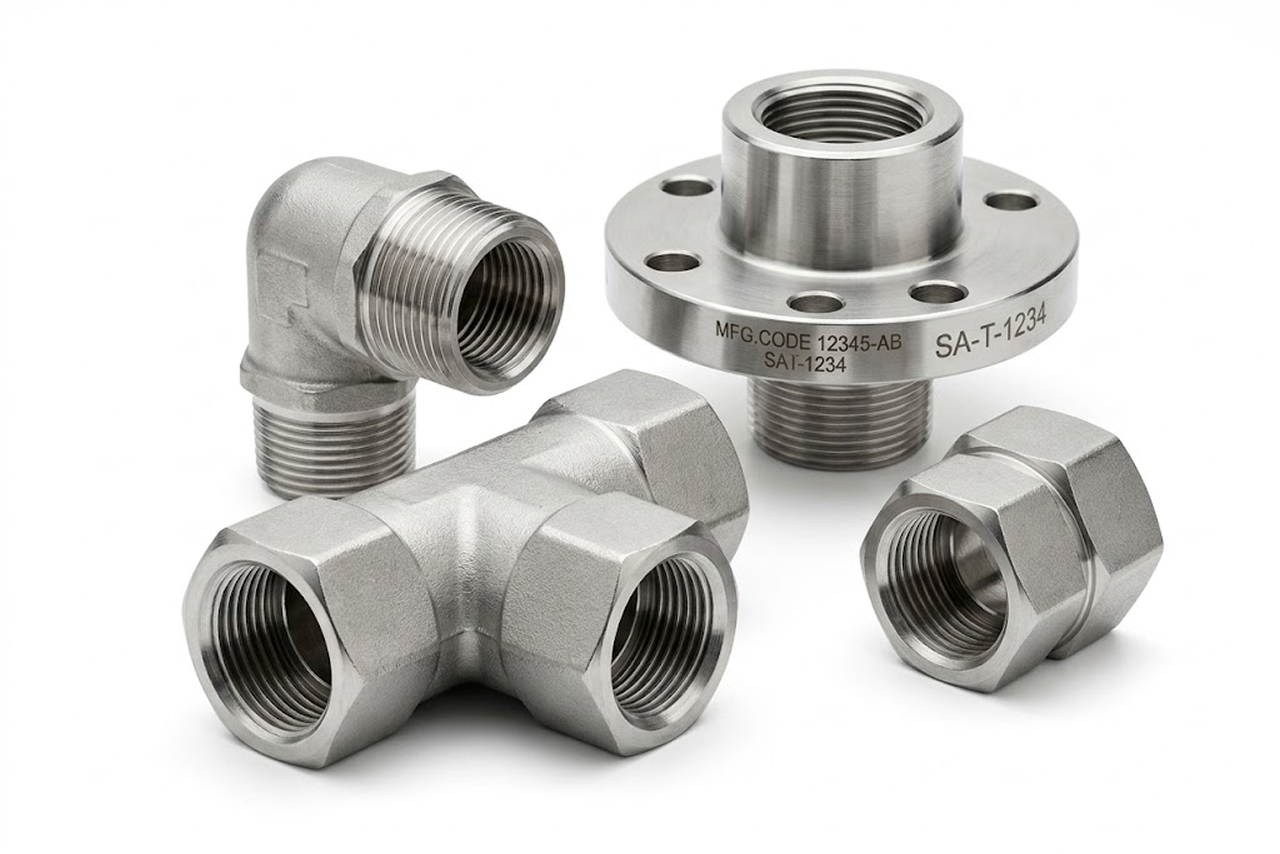
A push-to-connect fitting in fully 316L stainless construction for service where composite and brass bodies cannot pass the audit. Body, collet, sleeve, and grab-ring are AISI 316L, low-carbon austenitic stainless that resists sensitization through CIP (clean-in-place) and SIP (steam-in-place) cycles, with the molybdenum content that gives 316L its chloride pitting resistance. Food-grade FKM seals are standard; EPDM is available for caustic CIP and certain pharma chemistries. Working pressure runs vacuum to ~290 PSI; temperature range is +5°F to +392°F (-15°C to +200°C), wider at both ends than brass. This is the top off-the-shelf material tier; for hard-tube (rigid stainless or copper) connections, the right type is the instrumentation compression fitting (Swagelok-style), not a stainless PTC.
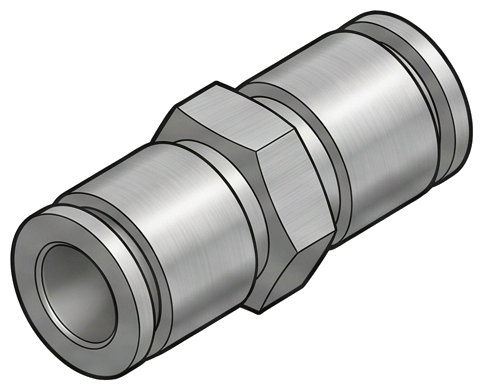
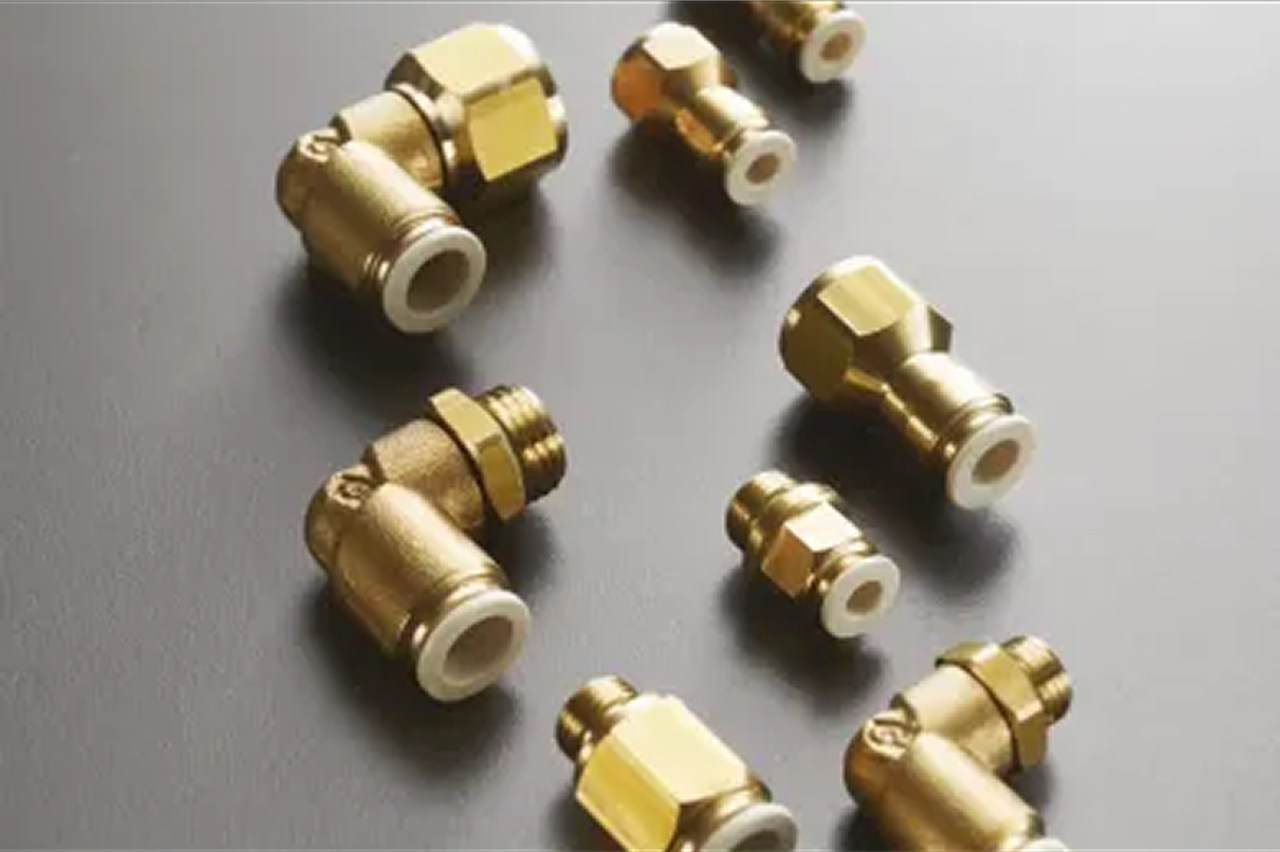
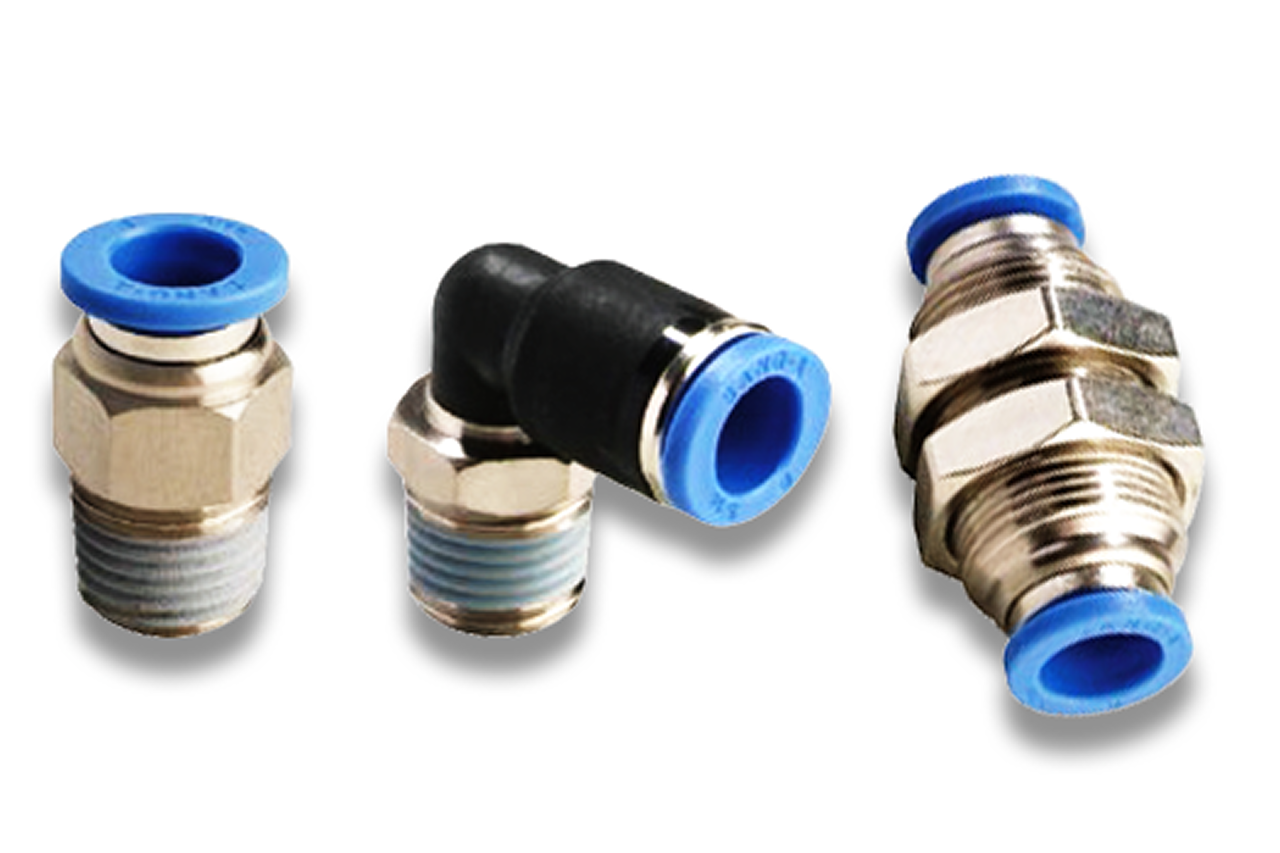
Pictorial Representative stainless steel push-to-connect fitting
Stainless Steel Push-to-Connect Fitting — representative illustration
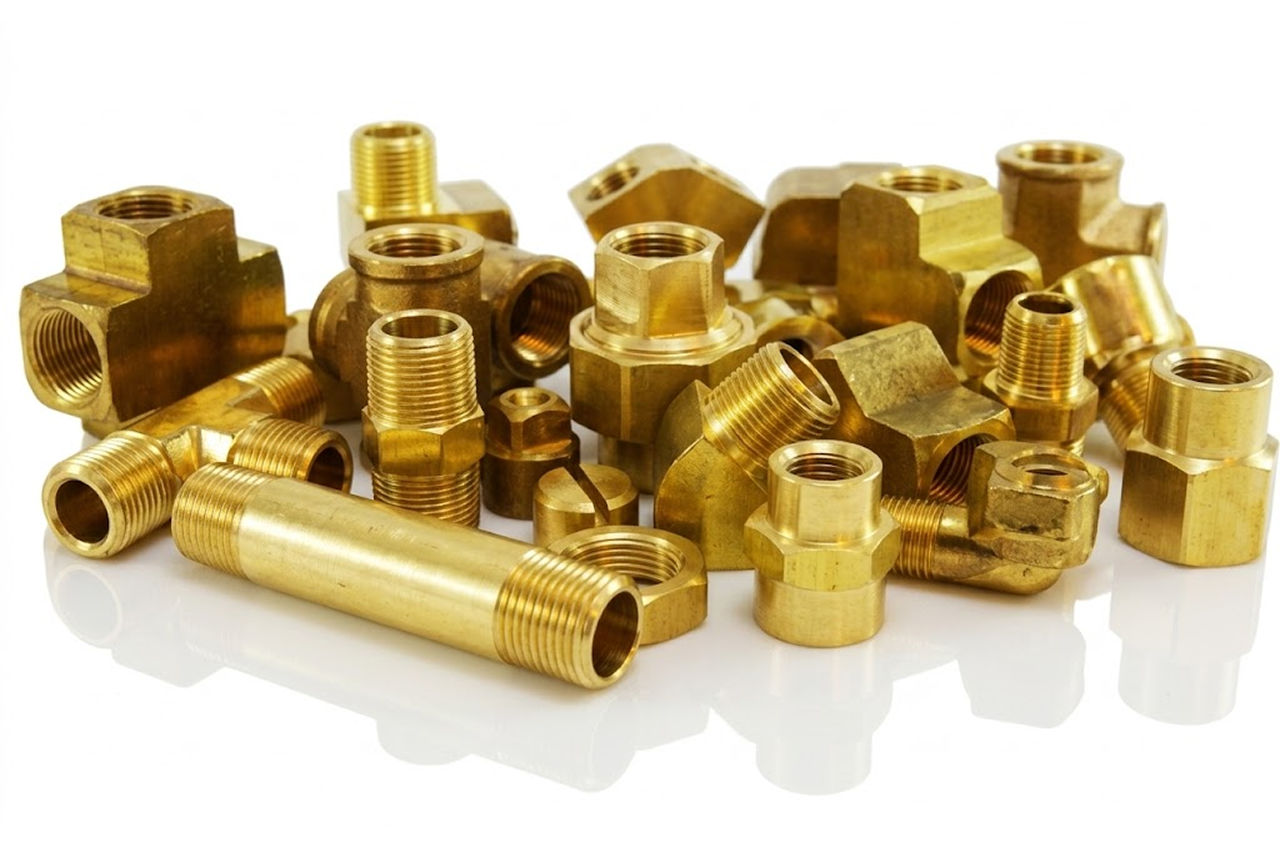
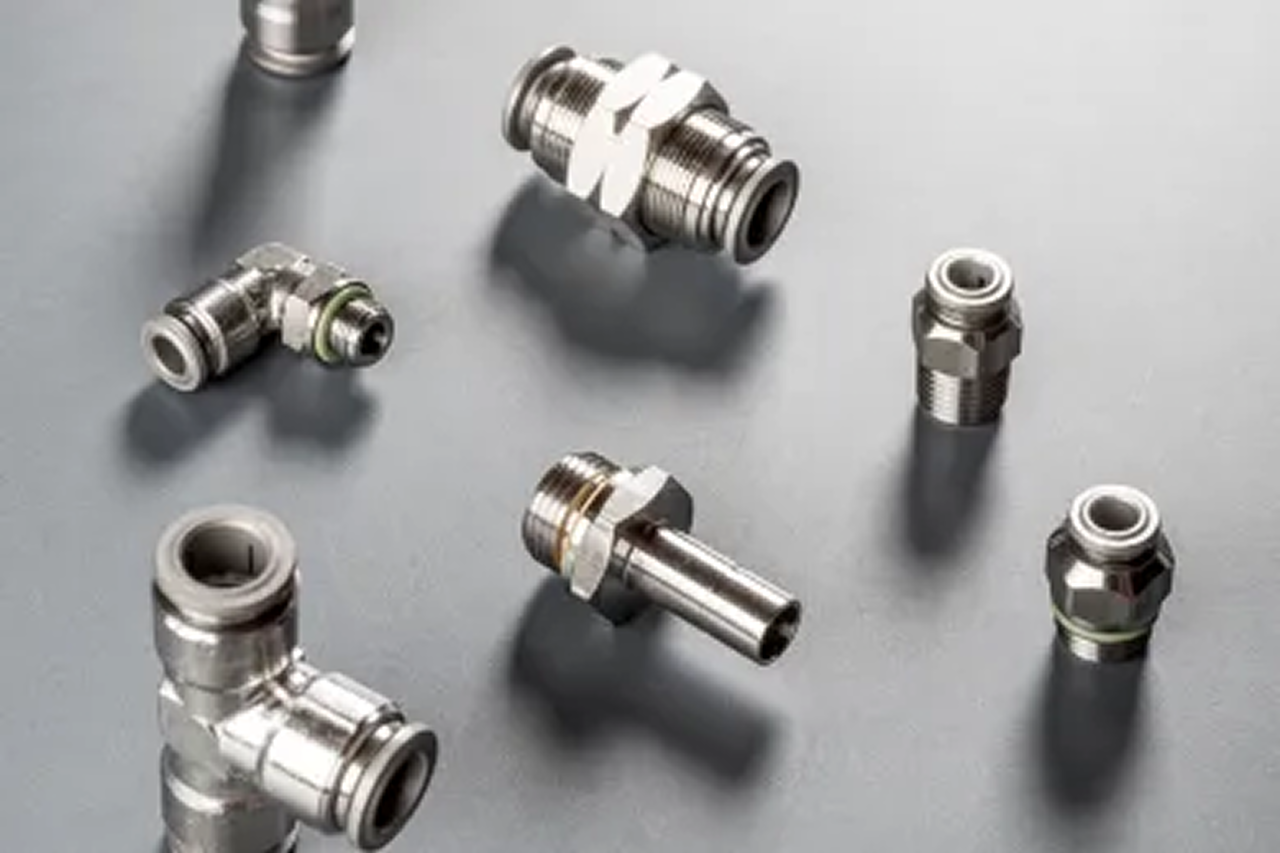
Real-world reference Representative stainless steel push-to-connect fitting
Stainless Steel Push-to-Connect Fitting — representative product photo
Why it's needed

Why this matters.

When 316L stainless PTC meets audit requirements, and when to spec something else. Review the points below.

01 · Key point
Fully 316L flow path.

Body, collet, grab-ring, sleeve all AISI 316L, not nickel-plated, not visible exterior only. The off-the-shelf answer when cGMP, FDA, or ISO audit requires fully-stainless construction.

02 · Key point
Chloride and CIP/SIP resistant.

The "L" (low-carbon) resists sensitization through steam-clean cycles; 2-3% molybdenum resists chloride pitting that destroys 304 in dairy, marine, and washdown.

03 · Key point
Vacuum to ~290 PSI.

Temperature band +5°F to +392°F: wider than brass at both ends. Same fitting serves a steam-cleaned dairy line and a hot chemical-process loop with no spec change.

04 · Pro tip
Match elastomer to chemistry.

FKM standard, food and most chemistry. EPDM required for caustic CIP, hot water, and certain pharma solvents. Confirm before quoting; most stainless lines don''t carry field-replaceable seals.

05 · Where not to use
Hard tube (rigid stainless, copper).

PTC seats on soft tube only, the grab-ring crushes against rigid tubing. → Use instrumentation stainless tube fitting (double-ferrule). Most common spec error on stainless PTC quotes.

06 · Where not to use
Non-audit-driven general air.

5-10x the cost of composite without proportional value where no audit or aggressive environment is in play. → Step down to composite PTC for general indoor plant air at ≤150 PSI, clean atmosphere.

07 · Where not to use
Food-adjacent / dry-zone packaging.

Over-spec where audit only requires NSF food-grade, not full stainless. → Step down to NSF food-grade PTC for packaging machinery, dry-zone food, cereal/snack/blending lines.

Key selection criteria

What we need to spec it right.

From the machine spec sheet to the part number. Answer what you know, leave the rest blank, and send.

04Choose your priority  ·  core differentiator

Whatever your lever — performance, value, or price — SPC has the right brand.

Pick the priority; the quote desk handles the cross-reference.

02 Value 1 brand
Install · 8 critical steps

The things that matter on the first install.

Step 01
Confirm tube is soft (PA/nylon or food-grade polymer), not hard
Stainless PTC seats on soft tube the same way composite and brass do, grab-ring bites a tube that compresses slightly under the bite. Stainless or rigid copper tubing will NOT seal in a PTC; it crushes the grab-ring or won't insert. Route hard-tube installs to an instrumentation compression fitting.
Step 02
Cut the tube square with a sharp cutter and deburr thoroughly
Stainless PTC has tighter manufacturing tolerances than composite or brass; an angled cut that "works" on composite fails outright on stainless. Use a fresh blade in a tube cutter; deburr the OD with a deburring tool. On food-grade tubing, wipe the tube end with 70% isopropanol to remove cutting debris.
Step 03
Verify O-ring elastomer matches chemistry and clean per the audit
Standard FKM is good for food and most chemistry. EPDM is required for caustic CIP, hot water, and certain solvents. Confirm against the spec sheet before install, field O-ring swap is rare on stainless PTC (most lines don't make field-replaceable elastomers). For pharma / cGMP, clean per the validated SOP before install.
Step 04
Insert tube to full insertion depth and tug-test
Push straight in (no rotation, no rocking) to internal stop, typical depth 16-22mm. The 316L grab-ring is firmer than brass or composite; takes more push-in force to seat fully. Tug back, firm resistance, zero travel. Any movement = not bottomed.
Step 05
Correct sealant per thread type, none on parallel
NPT/BSPT (tapered): 2-3 wraps food-grade PTFE tape, OR thread paste rated for stainless and the chemistry. BSPP (parallel): seals on bonded washer at the shoulder, NO thread sealant. For stainless-on-stainless threaded joints, anti-seize is sometimes specified (galling is a real risk on 316-316).
Step 06
Torque carefully, 316L galls under over-torque
Use a torque wrench. Typical NPT torque is slightly LOWER than brass: 12-18 ft-lb. Galled stainless cold-welds and locks the fitting permanently, damaging the port. When in doubt, under-torque and check for leak, adding torque is easy; removing a galled fitting is a port-replacement event.
Step 07
Leak-test with non-particulate-shedding solution
On food/pharma, do NOT use standard plumbing soap (contamination risk). Use snoop-style food/pharma-rated leak fluid, OR pressurize and wipe with isopropanol-water. Bring pressure up gradually; check every collet, every thread, every release sleeve. Zero bubbles = working.
Step 08
Document for traceability
cGMP requires 3.1 mill certs on 316L, install date, operator initials, batch/heat numbers, configuration log entered into the machine's validation document. The auditor will check, have docs ready at install, not three months later.
Troubleshoot · top failures

Most returns trace to one of these causes.

Symptom
Most likely cause
Fix
Slow leak at the collet on a newly-installed stainless PTC
Angled or burred tube cut (stainless has tighter tolerances than composite, a marginal cut that works on composite leaks on stainless), wrong tube OD, tube not bottomed, or grit on the OD damaged the O-ring at insertion.
Pull the tube, inspect the end with magnification. Cut square with a fresh blade, deburr cleanly, wipe with isopropanol, re-insert. Verify OD with a caliper, don't try to make a 1/4" tube work in a 6mm fitting.
Galling / seizure on the threaded port end (won't torque, OR won't back out)
316-316 cold-welding under torque (known failure mode), no anti-seize where specified, or repeated install/removal cycles.
If galled on install, STOP torquing immediately: additional torque locks the fitting permanently. Back out, clean threads, apply anti-seize rated for stainless (nickel-based or food-grade copper-based), re-install at reduced torque. If galled on removal, heat or drill-and-re-tap may be required. Galled stainless is an avoidable but expensive failure.
Tube blows off under pressure
Tube not seated past grab-ring, tube pressure rating below operating pressure (the tube failed, not the fitting), or wet/CIP-cycle chemistry degraded the tube OD until grab-ring lost grip.
Confirm tube is correctly sized and rated, and tube material is compatible with the service chemistry (some food-grade PA degrades in specific sanitizers). Re-insert fully, tug-test. If chemistry is degrading the tube, route to a different soft-tube polymer (food-grade PE, PTFE, FKM-lined).
Rust or discoloration on the 316L body within months
304 mis-supplied as 316 (visible failure mode, 304 fails in chloride, 316 does not), counterfeit "316" that's actually a lesser alloy, iron-particulate contamination during install (a steel tool used near stainless leaves a transfer layer that rusts), or extreme chemistry beyond 316L envelope.
Pull 3.1 mill certs on the installed fitting. If alloy is wrong, replace from verified authorized distribution. If alloy is correct, passivate the surface (citric acid passivation per ASTM A967 is food-safe). If chemistry exceeds 316L envelope, escalate to Hastelloy or different alloy.
Audit failure on material certification
Certs not on file, wrong certification provided (NSF cert when audit needed 3.1 mill certs, or vice versa), or counterfeit certs from non-authorized distribution.
Source from authorized distribution with documented chain-of-custody. Request 3.1 mill certs at PO time, not retroactively. Don't accept verbal claims of certification, require docs in writing.
O-ring swelling, hardening, or extruding within months
Wrong elastomer for the chemistry (FKM in caustic CIP, EPDM in fuel/oil), temperature peaks past envelope, or chemistry crossover (residue from one cleaning chemistry attacking the elastomer rated for a different chemistry).
Confirm elastomer against actual service chemistry, caustic CIP = EPDM; oil-based food contact = FKM; pharma = USP Class VI elastomer. Escalate to specialty stainless with custom-elastomer option if the line doesn't carry the right material.

Get the right stainless steel push-to-connect fitting on quote in 24 hours.

Send us the application — a specialist routes you to the correct tier with a configured part. Lead-times and pricing returned within one business day.

Open quote engine ↑