DISTRIBUTOR-FIRST SUPPLY PARTNER · SINCE 1999 Live · Compressed Air System
SPC Company
Compressed Air / Generation / Compressor Electrical Package / V-Belt
Layer 01 · Generation Value · SPC OEM
What it is

V-Belt

Compare tiers ↓

The V-belt is the flexible link in the drive train of a belt-drive compressor: it wraps the motor sheave and the airend or flywheel sheave and carries the motor's torque across the center distance between them. It lives in the Power & Drive layer, between the motor and the airend, and it is the cheapest, most-replaced part on a belt-drive package: a glazed, cracked, or slack belt slips, runs hot, and starves the compressor of capacity long before it snaps. A replacement is a match-the-old-belt job, cross-section, length, and number of belts in the set all have to line up with what came off, and on a multi-belt drive the belts must be replaced as a matched set so tension shares evenly across them. Get the section and length right off the old belt or the sheave grooves, set the tension to spec, and the drive runs cool and quiet for years.

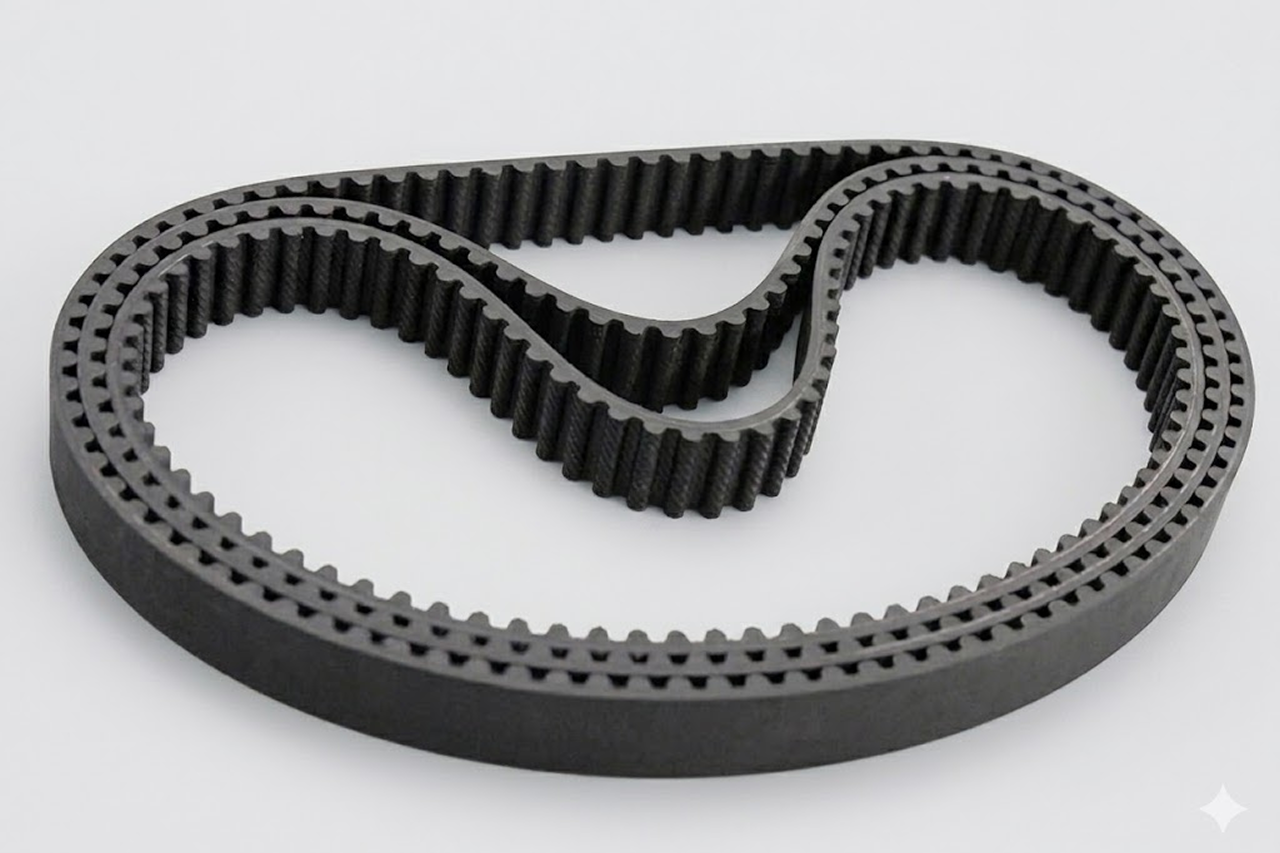
Pictorial Representative v-belt
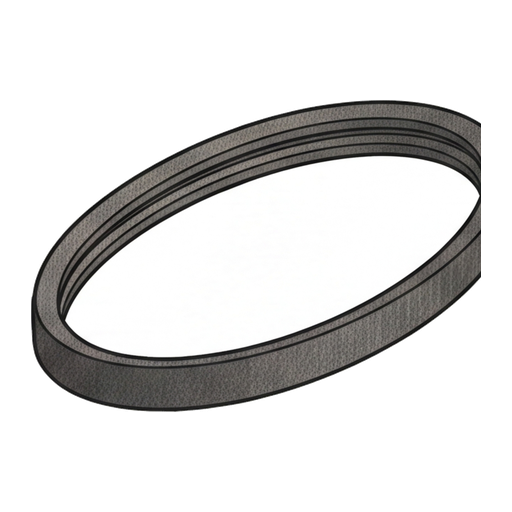
V-Belt — representative illustration
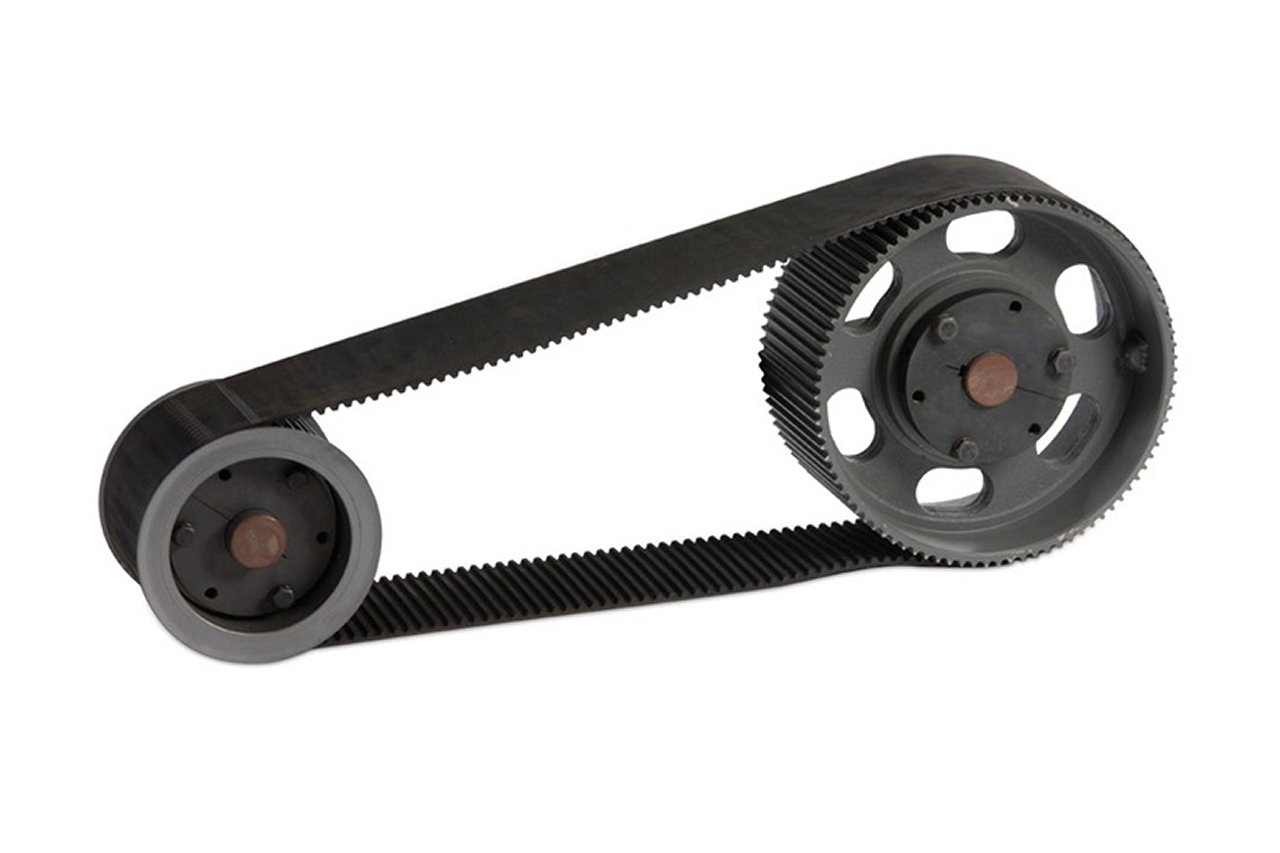
Real-world reference Representative v-belt
V-Belt — representative product photo
Why it's needed

Why this matters.

When a V-belt is the right call, how to match and tension it, and where the wrong call costs a return service visit. Review the points below.

01 · Key point
Always replace as a matched set.

On a multi-belt drive, mixing a new belt with old ones means the new belt carries the load and the old ones ride along, uneven tension, fast wear, and a callback in weeks. Replace every belt in the groove as a length-matched set so the load shares evenly. The set costs a few dollars more than one belt and saves the second service trip.

02 · Key point
Read the section and length off the part.

The cross-section and length are stamped on the side wall of the old belt (e.g. "B60", "5VX800"). Read it off the part or match the sheave grooves, classical and narrow sections are not interchangeable, and a measured guess from the running machine drifts. A photo of the stamp is the whole quote.

03 · Key point
Cogged belts run cooler and save energy.

A cogged / notched belt flexes into the sheave with less heat build-up and returns roughly 2-4% in drive efficiency over a smooth belt. On a compressor that runs a shift or more, that energy saving dwarfs the small price premium. Quote cogged as the upgrade on continuous duty.

04 · Pro tip
Tension is the whole job.

Correct tension is what makes a belt last. Too loose slips, glazes, and bakes itself hard; too tight side-loads the motor and airend bearings and shortens both. Set tension to the deflection spec at install, then re-tension after the first few hours of run-in, new belts seat and stretch.

05 · Where it bites
Mixing old and new belts.

One belt failed, so the customer wants to replace just that one. The new belt is a different length than the stretched survivors, takes all the load, and fails fast. → Replace the full set, every time, on any multi-belt drive; this is the single most common belt callback.

06 · Where it bites
Wrong section for the sheave.

A belt that almost fits a groove rides high or bottoms out, loses grip, and chews itself up. Classical A/B/C and narrow 3V/5V are not interchangeable. → Match the section to the sheave grooves, confirmed off the old belt stamp, before quoting the length.

07 · Where it bites
Belts throwing off a shock drive.

On a reciprocating compressor the torque pulses, and single belts can whip, flip, or jump the sheave. → Quote a banded (joined) set when single belts keep coming off or wearing unevenly; the tie-band holds the ribs together through the pulsation.

Technologies within this type

Which technology — and when to choose it.

Same job, carry the motor''s torque to the airend, but the cross-section, the notch, and how the belts are joined decide whether the drive runs cool, holds tension, and survives the room. Match these to the drive geometry and the duty, along with the length.

Classical vs narrow (wedge) section

Classical A/B/C/D is the long-standing standard and what most older compressors were built around. Narrow 3V/5V/8V carries more power in a smaller, lighter belt and sheave, common on newer and high-HP packages. Match whatever the existing sheave grooves are cut for; the two are not interchangeable.

Smooth vs cogged / notched

A cogged (notched) belt flexes into tighter sheaves, sheds heat through the open notches, and saves roughly 2-4% in drive efficiency, real money on a motor that runs a shift or more. On a continuous-duty compressor the cogged belt is usually the better buy at a small premium. Quote it as the upgrade.

Matched set vs banded / joined

Multi-belt drives run several belts side by side and they must be a length-matched set so load shares evenly. A banded (joined) belt ties the ribs together with a top band so they cannot whip, flip, or come off on high-shock, high-vibration, or pulsating reciprocating drives. Banded is the fix when single belts keep throwing off or wearing unevenly.

Key selection criteria

What we need to spec it right.

From the machine spec sheet to the part number. Answer what you know, leave the rest blank, and send.

04Choose your priority  ·  core differentiator

Whatever your lever — performance, value, or price — SPC has the right brand.

Pick the priority; the quote desk handles the cross-reference.

02 Value 5 brands
Where it's used

Industries served.

Each industry below uses this product across the listed areas. Open an industry to see how it fits the rest of its system.

Also applies to Reciprocating compressor packages, the core case · Belt-drive rotary-screw packages · Compressor rooms, routine service and MRO · OEM builds and drive rebuilds · Distributor counter & RFQ work

Install · 6 critical steps

The things that matter on the first install.

Step 01
Confirm section, length, and set count before it ships
Read the cross-section and length off the old belt's side-wall stamp (or match the sheave grooves), and count the grooves so the matched set is complete. A wrong section won't seat in the groove; a short set leaves the drive under-belted and slipping.
Step 02
Replace the full set, never mix old and new
On a multi-belt drive, every belt comes off and a fresh length-matched set goes on. A new belt run against stretched survivors carries the load alone and fails early; this is the number-one belt callback, and it's avoidable at the bench.
Step 03
Check the sheaves before the belts go on
Inspect the groove walls for wear, glazing, and a shiny "dished" bottom; a worn sheave eats a new belt fast. Replace a worn motor or airend sheave now, while the drive is open, not on the next service trip.
Step 04
Align the sheaves, then seat the belts
Put a straightedge across both sheave faces and correct any offset or angular misalignment, misalignment is the fastest way to wear new belts and side-load bearings. Move the motor in on its slide to drop the belts into the grooves; never pry or roll them over the sheave edge, which breaks the cords.
Step 05
Set tension to the deflection spec
Tension to the manufacturer's force-deflection figure for the section and span, loose belts slip and glaze, tight belts kill the motor and airend bearings. Use a tension gauge on anything bigger than a small shop unit; don't set it by thumb.
Step 06
Re-tension after run-in and refit the guard
New belts seat and stretch in the first few hours of running, re-check and re-tension after run-in, then again at the first service interval. Refit the belt guard before the machine goes back to work; a belt-drive package without a guard is a safety violation, not a shortcut.
Troubleshoot · top failures

Most returns trace to one of these causes.

Symptom
Most likely cause
Fix
Belt slips, squeals, or smells like burning rubber
Tension too low (most common), glazed belt that has lost grip, oil or coolant on the belt, or an overloaded / seized driven end.
Re-tension to the deflection spec. If the belt is glazed or oil-soaked, replace the set, glazing doesn't come back. Find and stop the oil leak before fitting new belts. Rule out a binding airend before blaming the belt.
Belts wear unevenly or one keeps failing first
Mismatched set (new belt mixed with old), sheave misalignment, or a worn sheave groove riding the belt high.
Replace all belts as a length-matched set. Straightedge the sheaves and correct alignment. Inspect the grooves, a dished, shiny groove bottom means the sheave is worn and must be replaced.
Belt throws off or flips in the groove
Severe misalignment, a shock / pulsating drive whipping single belts, or debris in the groove.
Correct alignment first. On a reciprocating or high-shock drive that keeps throwing single belts, switch to a banded (joined) set so the ribs hold together. Clear and clean the grooves.
Belt cracks, frays, or glazes early
Sheaves too small for the section (excess flex heat), high ambient temperature, over-tension, or back-bend over an idler.
Verify the section suits the sheave diameter, a cogged belt flexes into smaller sheaves with less heat. Re-tension to spec. In a hot room, spec a heat-resistant compound. Don't run a standard belt over a flat back-side idler.
Drive vibrates or runs noisy
Belts not a matched set (unequal lengths), worn sheaves, or bearing wear in the motor or airend transmitting through the drive.
Confirm the belts are a true matched set. Replace worn sheaves. If vibration persists with good belts and sheaves, check motor and airend bearings; the belt is reporting a problem upstream.

Get the right v-belt on quote in 24 hours.

Send us the application — a specialist routes you to the correct tier with a configured part. Lead-times and pricing returned within one business day.

Open quote engine ↑